
 English
 русский
 Français
 Español
 Deutsch


Provide you with the latest enterprise and industry news
How a Self Loading Mini Dumper Reduces Manual Material Handling
Update:09-11-2026
Posted by Admin
Content
- 1 Why Manual Material Handling Is Difficult on Construction Sites
- 2 How a Self Loading Mini Dumper Cuts Manual Handling
- 3 What Materials Suit a Self Loading Mini Dumper
- 4 How a Self Loading Tracked Mini Dumper Improves Handling
- 5 Supporting Different Material Handling Tasks
- 6 Manual Handling Versus Machine-Assisted Flow
- 7 Practical Limits That Still Apply
- 8 Selecting Equipment for Less Manual Haulage
- 9 Reducing Hand Haulage Through Combined Machine Functions
Why Manual Material Handling Is Difficult on Construction Sites
Physical Effort Required for Moving Bulk Materials
Moving soil, sand, gravel and similar bulk materials by hand means repeated shovelling, lifting and tipping into barrows or small containers. On even a modest garden or renovation job those motions add up across many short trips. Fatigue rises as distances grow between the pile and the place where the material is needed, and the work stays heavy for the whole shift when no machine shares the load.
Time Lost When Loading and Hauling Stay Separate
When one person or team loads by hand and another moves a barrow, every load is handled twice at the pile and again at the tip. Extra transfers multiply steps without increasing the amount of material placed. Combining collection and transport in one sequence cuts those intermediate moves and shortens the path from stockpile to fill point.
Restricted Access on Small Sites
Garden paths, side returns, indoor renovation routes and tight yards often block larger dumpers and loaders. Wheelbarrows fit, but they still depend on human strength. Compact tracked carriers are useful in those spaces because they can follow narrow routes while carrying more than a single barrow load, provided ground conditions and machine limits allow.
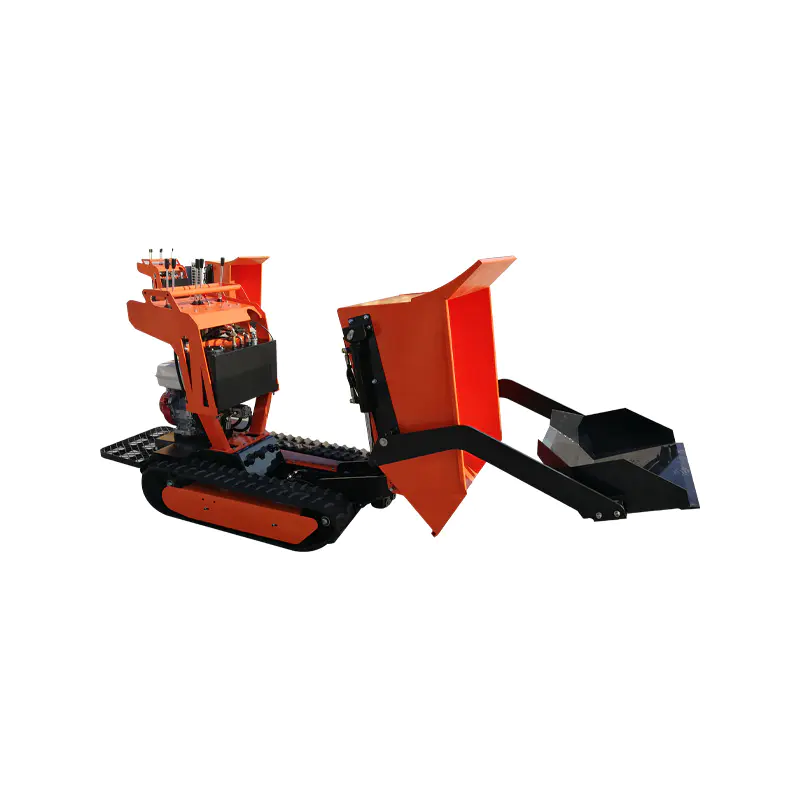
How a Self Loading Mini Dumper Cuts Manual Handling
Integrated Self Loading Function
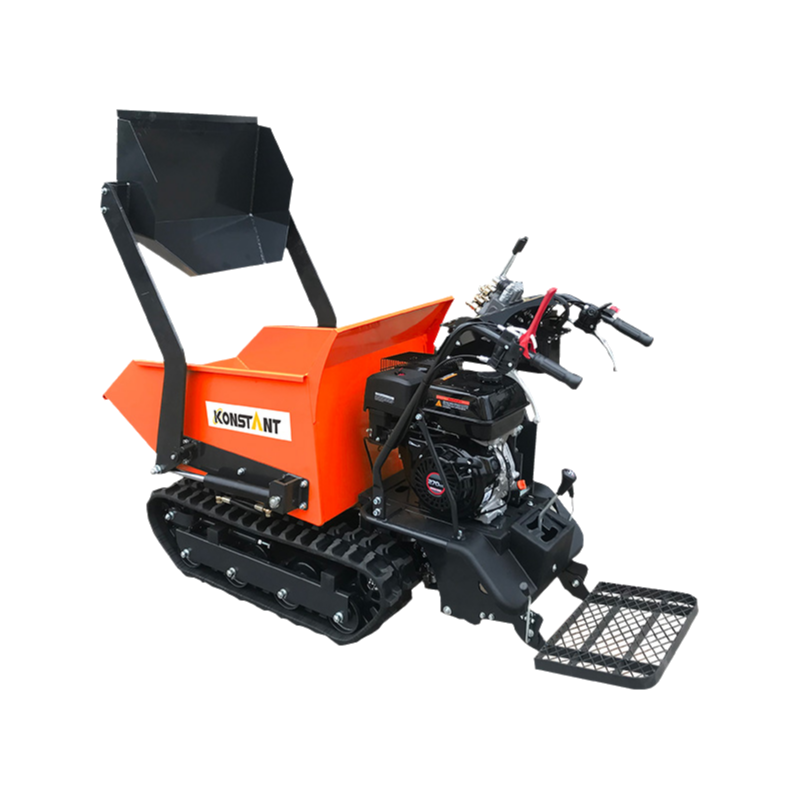
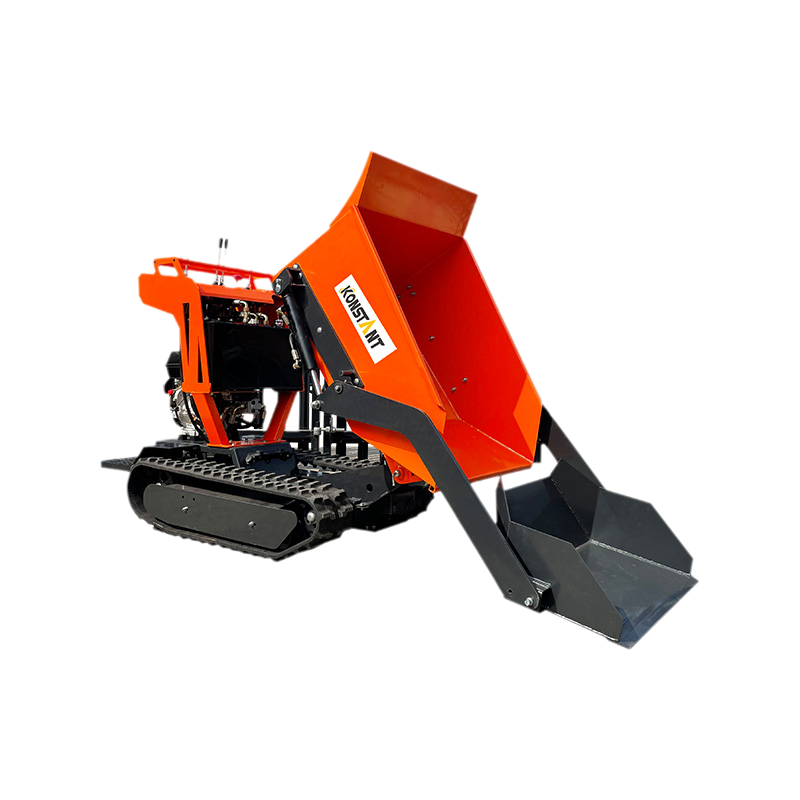
A self-loading arrangement uses a powered scoop or similar mechanism to gather material into the skip without requiring every kilogram to be lifted by shovel. Operators position the machine at the pile, fill the skip under control and then travel to the discharge point. Repetitive bending and throwing into a high-sided barrow are reduced, especially when the same pile is visited many times in one day.
Loading and Transport in One Machine
Because the same unit both fills and carries, material does not need to pass from a separate loader into a second transporter for short site moves. Small crews benefit when one machine covers both tasks within its rated capacity and terrain limits. Coordination between two pieces of equipment is unnecessary for routine bulk shifts on compact plots.
Mechanical Dumping at the Destination
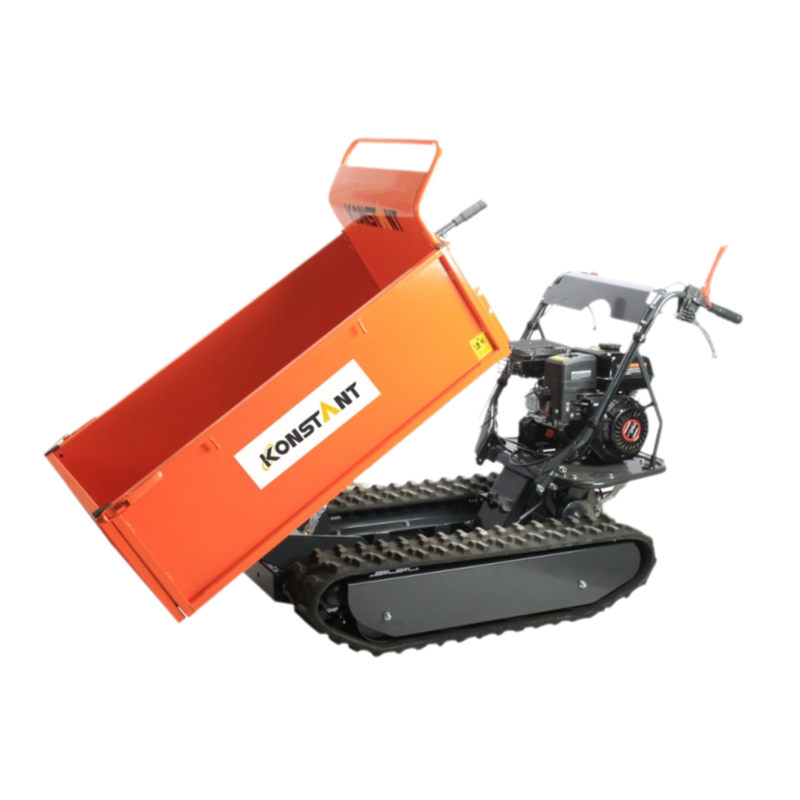
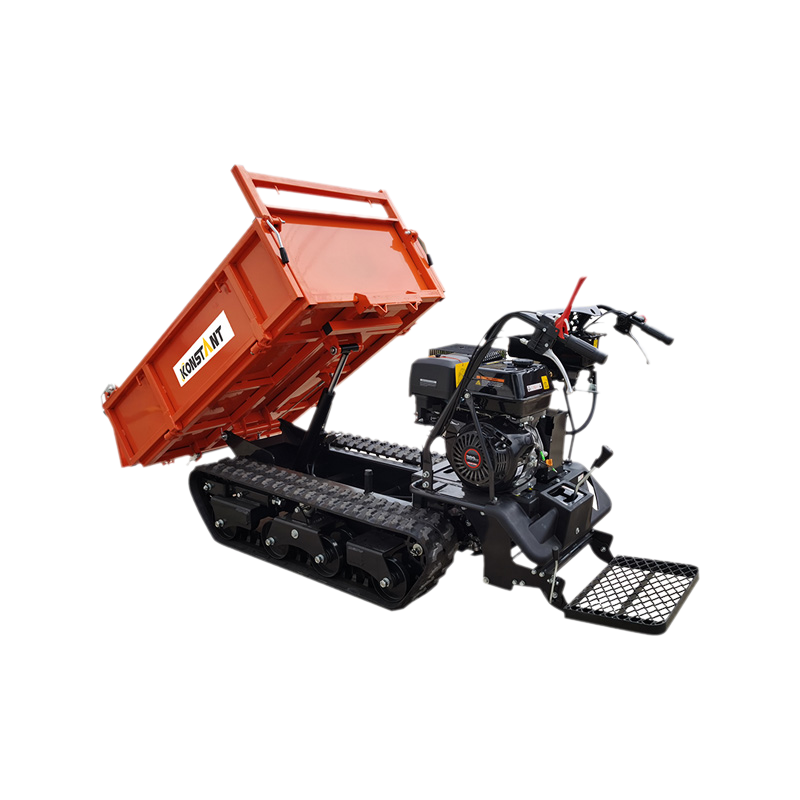
When the skip reaches the tip location, a powered dump empties the load. Workers do not have to dig material out by hand or tip a heavy barrow by sheer force. Soil, sand and other free-flowing bulk products suited to the skip design leave the machine in a controlled motion, which also helps place material more neatly in trenches or beds.
What Materials Suit a Self Loading Mini Dumper
Soil and Earth
Landscaping, garden regrades and light groundwork involve frequent short hauls of soil. Self loading supports repeated collection from excavated heaps and delivery to fill areas without rebuilding a manual chain of barrows for each pass.
Sand and Gravel
Sand and gravel used for bedding, paths or small concrete works can be moved from delivery piles to the point of use. Loading and dumping functions keep the flow of material moving as long as particle size and moisture stay within what the scoop and skip can handle, and total weight stays inside the machine rating.
Other Construction and Landscaping Products
Suitable building and landscaping bulk items may be carried when they fit the skip and respect load limits. Oversized rubble, excessive weight or materials that jam the loading device fall outside normal use and need different equipment. Matching product type to machine design remains part of safe planning. A Self Loading Mini Dumper is selected for these bulk flows when access is tight and manual barrow work would otherwise dominate the day.
How a Self Loading Tracked Mini Dumper Improves Handling
Integrated Self Loading Design
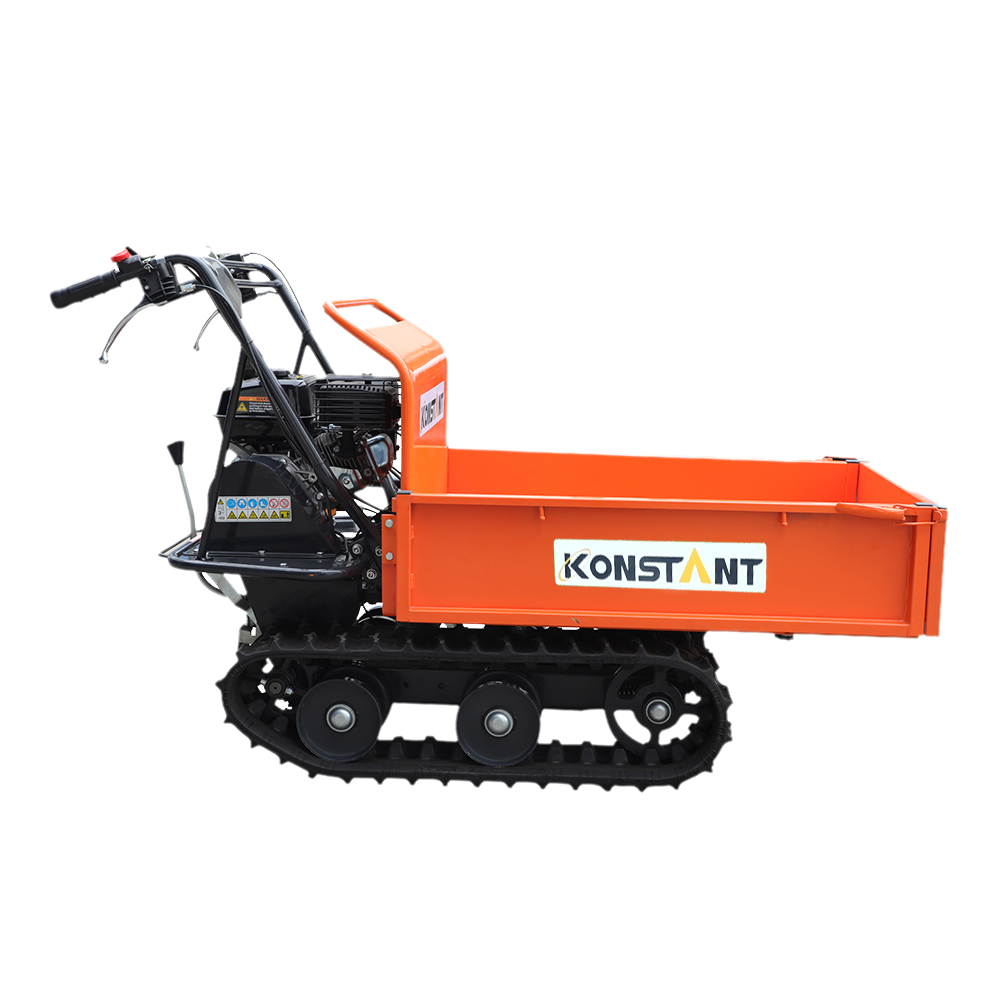
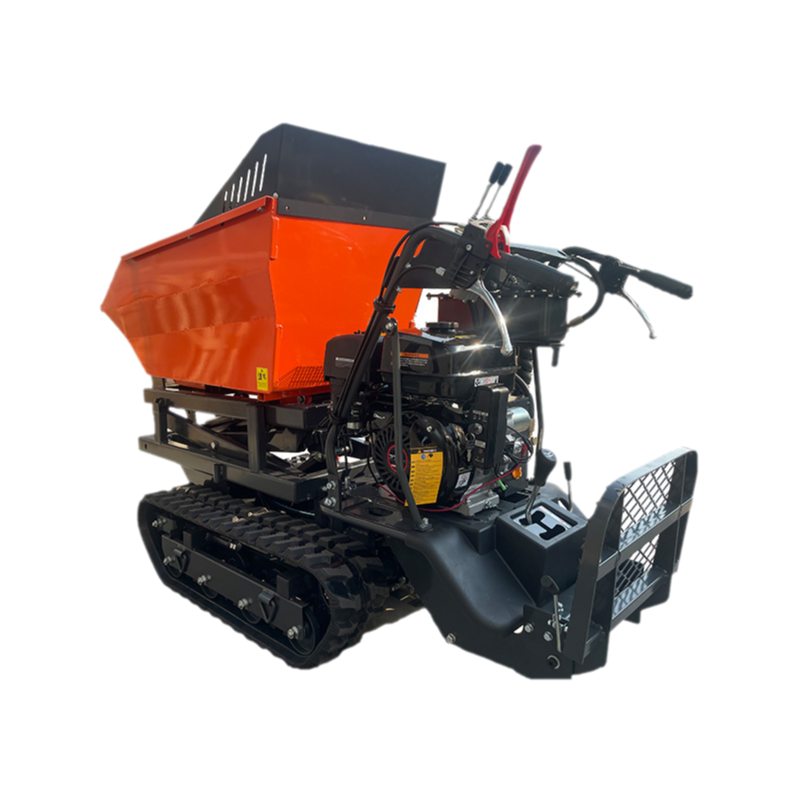
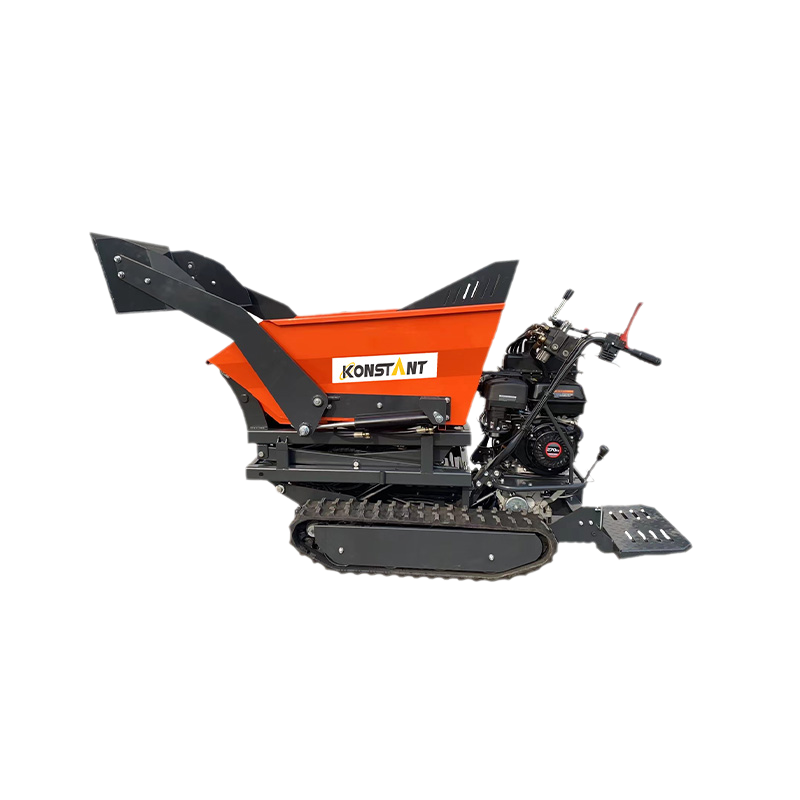
A self loading, fully hydrostatic crawler mini dumper brings powered loading and transport together on one tracked chassis. The loading device fills the skip at the stockpile; the machine then carries the load without a second handling stage. That layout is aimed at reducing shovel-and-barrow cycles on small construction and landscaping tasks.
Crawler Track System for Site Travel
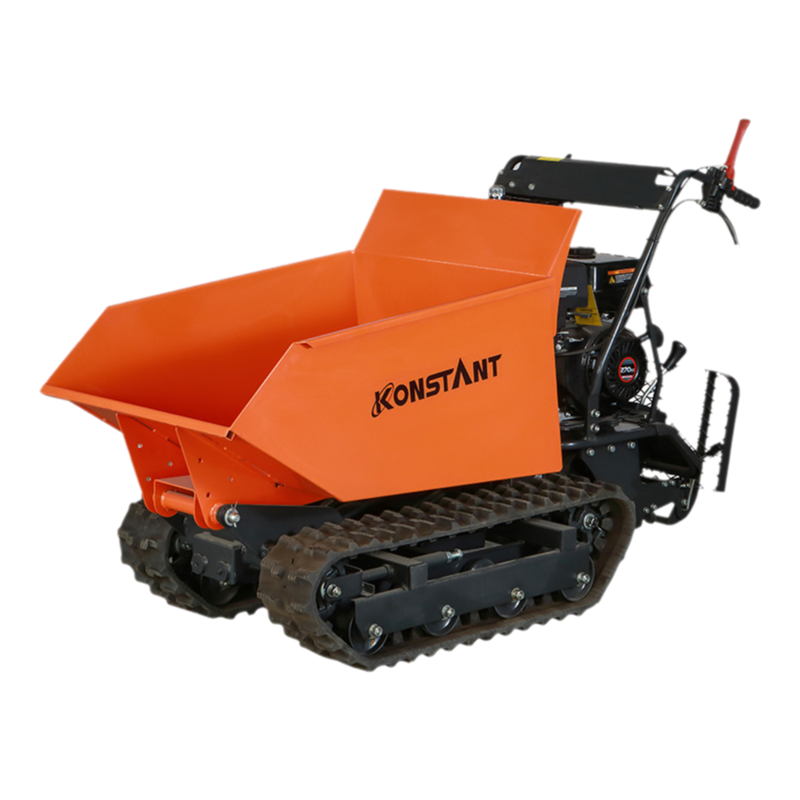
Tracks spread contact over soft or uneven ground more evenly than small wheels in many outdoor conditions. Travel across rough garden soil, compacted site tracks or light slopes is subject to the machine's operating limits and to site assessment. Tracked mobility is a practical advantage where barrows sink or where narrow gates prevent wider wheeled dumpers from entering.
Fully Hydrostatic Drive
A fully hydrostatic transmission delivers drive in a form that supports smooth control of travel and working movements according to the machine's design. Operators regulate speed and direction through the intended controls, which helps when inching toward a pile or lining up to dump in a confined corner.
Petrol and Diesel Engine Options
Petrol and diesel power variants allow buyers to match fuel type and site preference. Choice depends on runtime needs, fuel availability and local rules, always within the ratings published for each version.
Value on Small Construction and Landscaping Jobs
Self loading, tracked travel and powered dumping work as one chain: gather, move, empty. Manual steps remain for trimming and finishing, but the bulk of the mass is shifted by the machine. That division of labour suits crews who must move cubic metres of soil or aggregate without a full-size loader on site. A Mini Crawler Dump Truck in this self-loading form is aimed at those compact outdoor workflows.
Supporting Different Material Handling Tasks
Construction Site Bulk Moves
Short hauls of soil, sand and compatible aggregates between excavation, stockpile and placement zones are typical. The machine stays useful when paths are too narrow for larger plant and when schedules depend on steady small loads rather than occasional large dumps.
Garden and Landscaping Work
Turf projects, bed preparation and garden renovations need soil in and out of confined outdoor rooms. Self loading at the heap and dumping at the bed cut the number of manual transfers along paths and lawn edges.
Small Renovation and Groundwork
Side-return trenches, patio bases and similar groundwork often lack space for conventional dumpers. Integrated loading and dumping keep material moving through those corridors when the machine dimensions fit the access route.
Manual Handling Versus Machine-Assisted Flow
| Task stage | Manual approach | With self loading mini dumper |
|---|---|---|
| Collecting from pile | Shovel into barrow | Powered scoop into skip |
| Moving across site | Push or pull barrow | Tracked travel under operator control |
| Emptying at destination | Hand tip or dig out | Mechanical dump of skip |
| Repeat cycles | Full physical effort each load | Effort shifts to operating and spotting |
| Narrow access | Barrow only in tight gaps | Compact tracked unit if width allows |
| Crew focus | Strength and stamina limited | More time on placement and finishing |
Practical Limits That Still Apply
Self loading mini dumpers reduce lifting and barrow trips; they do not remove the need to respect rated load, ground stability, slope limits and suitable material types. Operators still plan routes, avoid overload and use the dump function only on stable standing ground. Training and adherence to the machine instructions remain part of everyday use.
Selecting Equipment for Less Manual Haulage
Sites that repeatedly move soil and aggregate through restricted access benefit significantly when loading, carrying and dumping are integrated into one compact tracked platform. Engine type, track condition and skip suitability for the material should be confirmed against real piles and paths before reliance on the machine for the whole shift.
Reducing Hand Haulage Through Combined Machine Functions
A self loading mini dumper shortens the chain of manual shovelling, barrow runs and hand tipping by gathering material, carrying it on tracks and emptying the skip mechanically. Petrol or diesel power and hydrostatic drive support controlled movement on small construction and landscaping plots when used inside design limits. WUXI KONSTANT POWER TECH CO., LTD produces compact tracked dumpers including self loading configurations for material movement on confined outdoor sites. Review of loading method, track suitability, load rating and engine option against typical soil and aggregate tasks supports selection of a machine that cuts repetitive manual handling on everyday bulk shifts.
Related products

Latest Updates
-
How a Self Loading Mini Dumper Reduces Manual Material Handling
Why Manual Material Handling Is Difficult on Construction Sites Physical Effort Required for Moving ...
-
Chain Drive vs. Hydraulic Drive in Mini Dumpers: Key Differences
Power from the engine must reach the wheels before a compact dumper can move material across a site....

-
Welcome To Visit Us
No.30, Third Furong Road, Wuxi City, Jiangsu. 214100, China.
-
Call Us
Phone: +86 181-1889-1139
Phone: +86 181-1889-2139
-
Contact Us Online
E-mail: sales@konstantpm.com
E-mail: marketing@konstantpm.com
Copyright WUXI KONSTANT POWER TECH CO., LTD All Rights Reserved
 China Mini Dumpers Manufacturers Power Wheelbarrow Factory