
 English
 русский
 Français
 Español
 Deutsch

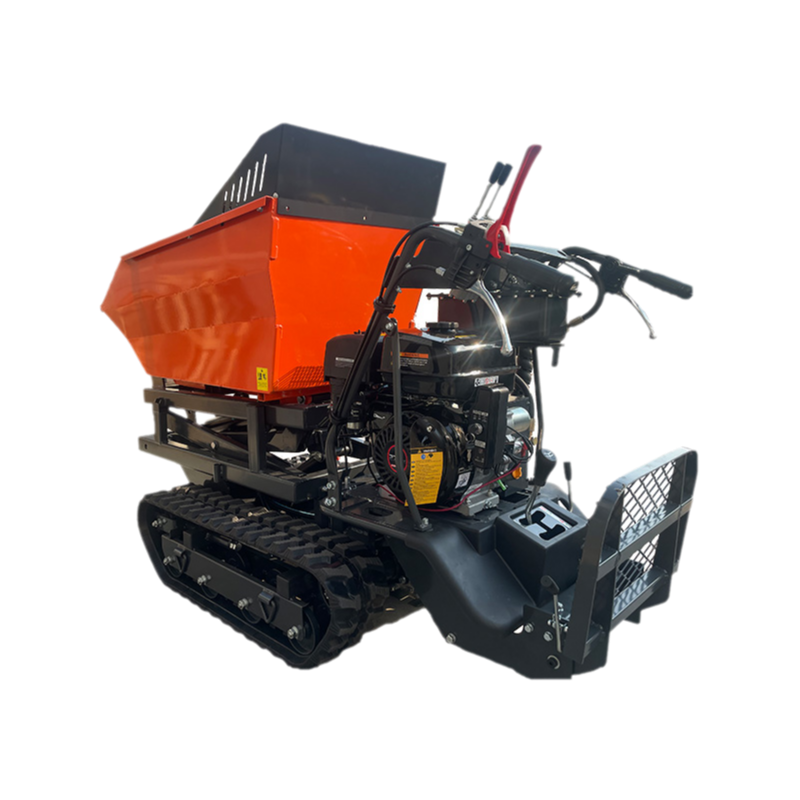
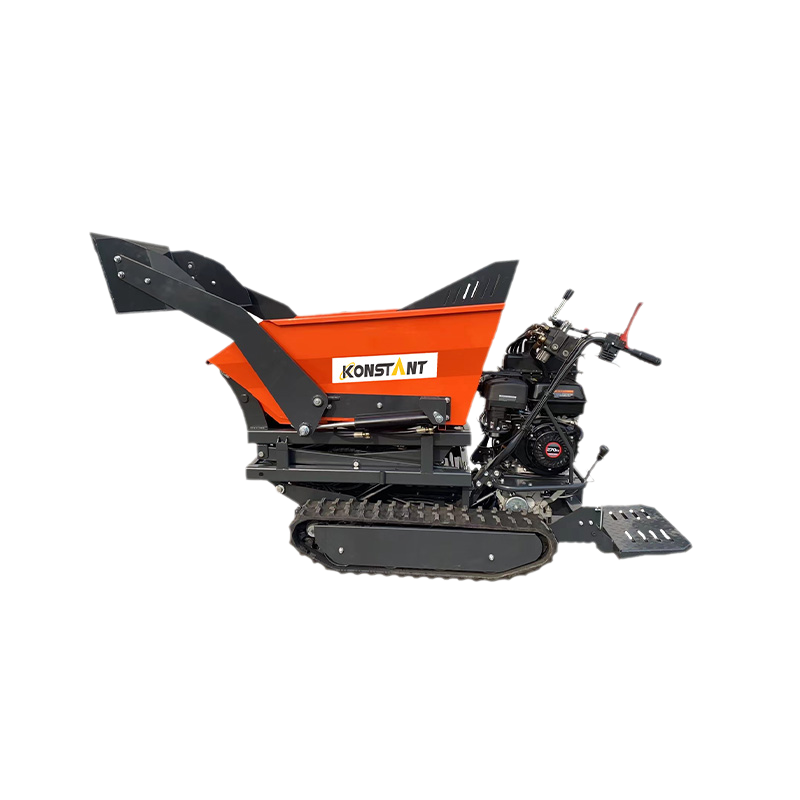
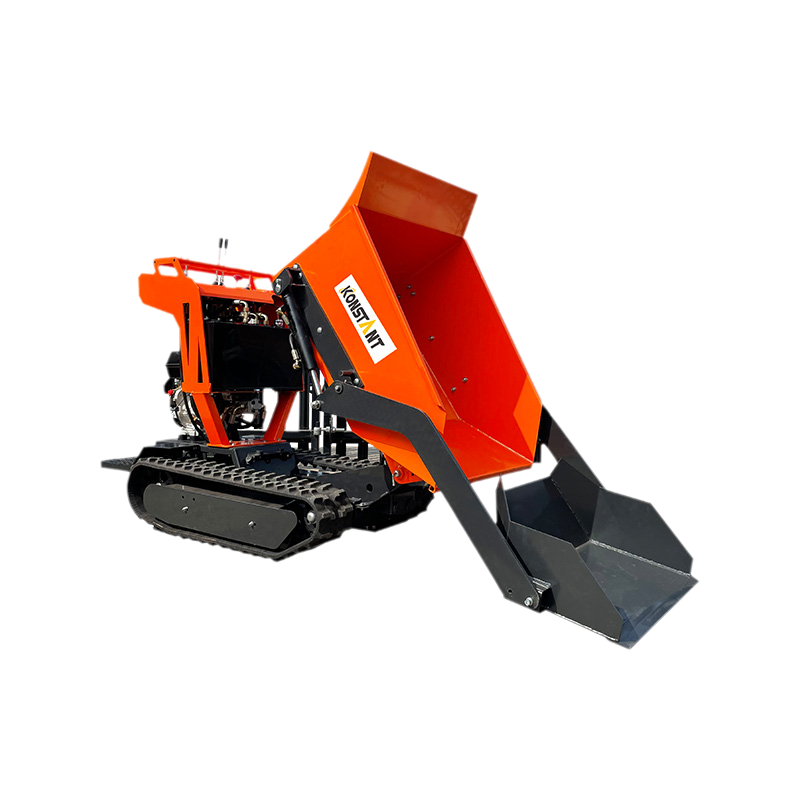
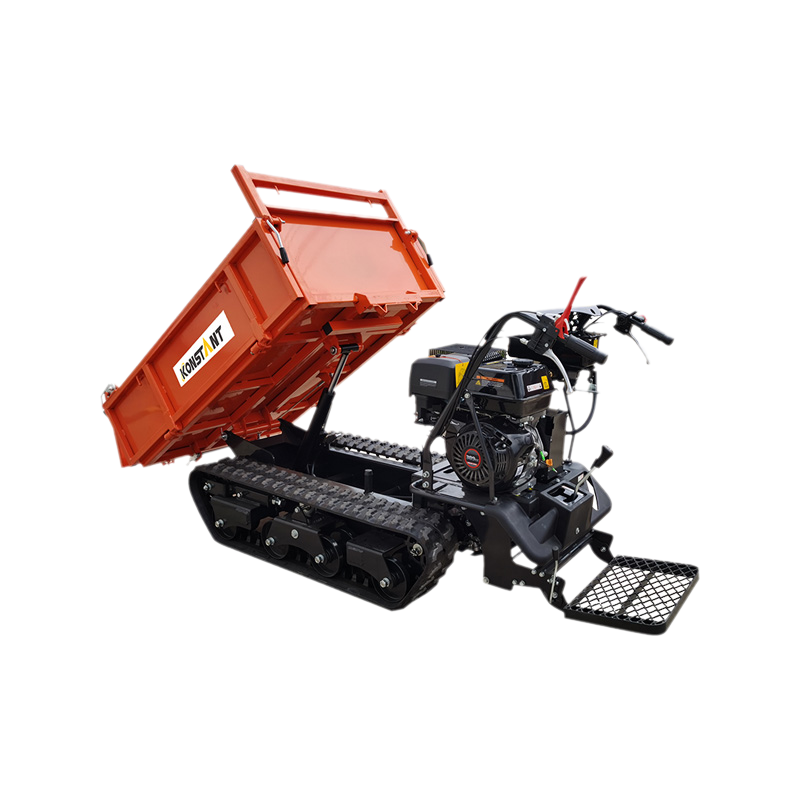
Provide you with the latest enterprise and industry news
How Does a Garden Loader Handle Rough and Narrow Terrain
Update:18-05-2026
Posted by Admin
Content
- 1 What helps a garden loader stay stable on uneven ground?
- 2 How does it behave on soft, loose, or slippery surfaces?
- 3 Why does balance become more noticeable on slopes?
- 4 How does it move through narrow paths without losing control?
- 5 What happens when loads shift during transport?
- 6 How does it react when ground conditions change suddenly?
- 7 How do operators maintain control in tight and rough environments?
- 8 What allows it to function across constantly changing outdoor terrain?
Outdoor work rarely gives you flat, clean, predictable ground. Most of the time, the surface is mixed. A little soft soil here, a compact patch there, maybe a narrow path squeezed between plants or structures. A garden loader is used in exactly these kinds of places.
It is not a machine that relies on ideal conditions. It is built for the opposite. The way it moves depends on how it reacts in real time to whatever is under it. Sometimes the change is subtle, like a slight dip. Sometimes it is more obvious, like a muddy stretch that slows everything down.
What makes it interesting is not a single feature. It is the way many small behaviors come together while it moves.
What helps a garden loader stay stable on uneven ground?
Uneven ground is not always dramatic. It does not need to be a deep hole or a large bump. In outdoor spaces, the unevenness is small but constant. A slight rise, a shallow depression, a patch of loose soil that gives way under pressure.
A loader handles this kind of surface by not reacting too strongly to every change. If it did, movement would feel jerky and hard to control. Instead, it tends to smooth out small irregularities as it moves forward.
There is a kind of quiet balance in how it behaves. When one side of the machine passes over a slightly higher patch, the movement adjusts without a noticeable correction from the operator. It is not good leveling, more like continuous adaptation.
Weight distribution also matters, but not in a rigid way. When the load is spread out reasonably, the pressure on the ground does not concentrate too much in one point. This helps especially when soil is soft or recently disturbed.
The frame of the machine is usually kept compact. That sounds simple, but in narrow outdoor environments, compactness means fewer sudden shifts in balance when the ground changes unexpectedly.
Operators often notice that stability is not about eliminating movement. It is about controlling how movement feels. A slight tilt is acceptable as long as it stays predictable.
How does it behave on soft, loose, or slippery surfaces?
Soft or slippery ground is one of the more unpredictable challenges. It does not always look different at glance. A patch of grass may look firm but feel soft under pressure. Loose gravel might seem stable but shift slightly with every step.
A loader responds to this by adjusting its movement rather than trying to force a fixed pattern. On softer ground, it naturally slows down a bit. Not because it is restricted, but because slower movement keeps contact with the surface more consistent.
On loose gravel, there is often a slight sense of micro-movement under the machine. The surface shifts, but not enough to stop progress. The loader continues forward, accepting that the ground is not completely stable.
Wet surfaces add another layer. Grass or soil that has absorbed moisture can behave unpredictably. In those conditions, movement tends to feel more cautious, even if the operator does not consciously change anything.
Here is a simplified view of how different surfaces affect movement feel:
| Surface Condition | What the movement feels like |
|---|---|
| Firm dry soil | Smooth, steady rolling |
| Loose gravel | Slight shifting underfoot |
| Damp grass | Softer contact, reduced grip |
| Wet mud | Slow, careful forward motion |
What is important here is not perfection. It is continuity. The machine keeps moving without sudden stops or loss of control.
Sometimes the ground changes halfway through a short distance. That transition is where behavior matters most. A Garden Loader Factory does not reset or pause. It simply adapts while already in motion.
Why does balance become more noticeable on slopes?
Sloped terrain changes everything slightly. Even a gentle incline introduces gravity as a constant influence. It is not just about surface texture anymore. It is about direction of force.
A loader does not treat slopes as separate environments. It continues moving, but with adjustments that are almost invisible from the outside.
When going uphill, the machine feels like it is working slightly harder, but not in a sudden way. The movement remains steady, just with more resistance. Downhill movement feels different again, more like controlled release rather than pushing forward.
Load placement becomes more important here. If material is not centered, the effect of slope becomes more noticeable. One side may feel heavier, especially when the ground itself is uneven.
Operators usually learn quickly that slopes are not uniform. A single incline often includes small flat sections or changes in angle that are not immediately visible. The loader adjusts to each small shift as it appears.
Speed is often kept steady or slightly reduced. Not because speed itself is dangerous, but because slower movement gives more time for balance to settle naturally.
Balance on slopes is less about correction and more about prevention. Once movement is stable, it tends to stay stable unless something changes sharply in the ground.
How does it move through narrow paths without losing control?
Narrow spaces are very common in garden work. Between fences, along walls, through planting rows, or around stored materials. These are not wide open areas. There is often very little margin for error.
A loader handles this by keeping its movement compact and controlled. It does not need large turning space. Instead, direction changes happen in small steps.
In practice, movement in narrow areas feels slower, but not forced. The machine is still capable of moving smoothly, but everything happens with more awareness of surrounding space.
Edges matter here. Plants, structures, tools left nearby—all of these become part of the environment the operator is constantly aware of.
Steering adjustments are usually subtle. Instead of sharp turns, there are small corrections that gradually guide the machine through tight passages.
There is also a rhythm to movement in these spaces. Forward motion, slight adjustment, forward again. It is not mechanical repetition, more like continuous alignment with the available space.
A simple breakdown of how narrow-space movement tends to behave:
- Forward motion remains controlled and steady
- Steering changes are small and frequent
- Speed is reduced naturally by conditions
- Surroundings are constantly checked while moving
What makes this interesting is that narrow paths often look easier than they are. A straight line between two edges can still require careful correction because ground conditions change even within that small space.
What happens when loads shift during transport?
Transporting materials outdoors is rarely neat. Soil, gravel, plant matter—all of it can move slightly while being carried. This is normal, but it changes how the machine feels during movement.
A loader does not rely on perfectly fixed load positions. Instead, it is designed to tolerate small shifts without becoming unstable.
When material shifts to one side, the change is usually gradual enough that movement continues without interruption. The operator may feel a slight difference in balance, but not a sudden reaction.
The surface underneath also influences how noticeable this shift becomes. On flat ground, it is less visible. On uneven terrain, the effect can feel stronger, even if the actual shift is small.
Good loading practice still matters. When material is placed in a more centered way, movement tends to stay calmer throughout the path. But in real work environments, better loading is rare.
So the machine works with what is available rather than expecting ideal conditions.
How does it react when ground conditions change suddenly?
One of the common realities in outdoor work is that ground conditions change without warning. A path that looks firm at the start may become soft after a few steps. Dry soil can turn slightly loose. Grass can hide uneven patches underneath.
A loader does not pause when this happens. It continues moving, adjusting as it goes.
The adjustment is not dramatic. There is no clear "switch" in behavior. Instead, the change is gradual. Movement becomes slightly slower or slightly more cautious depending on resistance.
Steering also adapts in small ways. If the ground pulls the machine slightly off direction, corrections happen naturally during movement rather than as a separate action.
What stands out here is continuity. Even when conditions shift, the movement does not break.
Sometimes the operator only notices the change after it has already happened, which suggests how subtle the adjustment actually is.
How do operators maintain control in tight and rough environments?
Even with a well-behaved machine, operator input remains essential. Outdoor environments are too variable for automatic behavior alone.
In rough or narrow areas, control becomes more about observation than force. Operators watch the ground closely, adjusting movement based on what is visible and what is felt through the machine.
Movements tend to be small. Large steering actions are good because space does not allow for correction once made.
There is also a certain patience involved. Progress is not always fast, and it does not need to be. Steady movement is usually more reliable than speed in these conditions.
Over time, operators begin to anticipate how the machine responds. Not in a technical sense, but through repeated experience in similar ground conditions. That familiarity changes how decisions are made.
Sometimes the difference between smooth movement and awkward adjustment is just a small change in timing.
What allows it to function across constantly changing outdoor terrain?
Outdoor terrain does not stay consistent even within a single task. A short working route may include firm soil, loose gravel, narrow passage, and slightly sloped ground all in sequence.
A garden loader handles this by not separating these conditions in its behavior. It treats them as part of the same continuous environment.
There is no need for reconfiguration or reset between changes in terrain. Movement simply adapts as conditions shift.
Compact structure helps in narrow sections. Balanced movement helps on uneven ground. Gradual response helps on soft surfaces. These elements overlap rather than operate separately.
Even maintenance habits contribute indirectly. When the machine is kept in good working condition, its responses remain more predictable over time, which matters more than peak performance in isolated conditions.
The overall behavior is less about control in a strict sense and more about staying usable across many small changes that happen constantly outdoors.
Related products

Latest Updates
-
Why Does Terrain Matter When Choosing a Battery Operated Wheel Barrow
A Battery Operated Wheel Barrow can make material transport easier in many working environments. I...
-
Where Can Petrol Wheelbarrows Be Used for Material Transport
Material transport is a daily part of many outdoor jobs. Soil needs to reach a planting area. Ston...

-
Welcome To Visit Us
No.30, Third Furong Road, Wuxi City, Jiangsu. 214100, China.
-
Call Us
Phone: +86 181-1889-1139
Phone: +86 181-1889-2139
-
Contact Us Online
E-mail: sales@konstantpm.com
E-mail: marketing@konstantpm.com
Copyright WUXI KONSTANT POWER TECH CO., LTD All Rights Reserved
 China Mini Dumpers Manufacturers Power Wheelbarrow Factory