
 English
 русский
 Français
 Español
 Deutsch


Provide you with the latest enterprise and industry news
Petrol vs. Diesel Mini Dumper: Which Engine Type Suits Your Work
Update:13-11-2026
Posted by Admin
Content
- 1 Why Engine Type Matters When Choosing a Mini Dumper
- 2 Petrol Mini Dumpers: Features and Suitable Use
- 3 Diesel Mini Dumpers: Features and Suitable Use
- 4 Petrol Versus Diesel: Practical Differences
- 5 Comparison Points for Engine Selection
- 6 Self Loading Tracked Mini Dumper with Two Engine Options
- 7 Selecting Fuel Type Without Ignoring the Whole Machine
Why Engine Type Matters When Choosing a Mini Dumper
Understanding the Role of the Engine
The engine supplies the power that drives travel, loading and dumping on a compact dumper. Output, torque behaviour and continuous running ability all depend on how that engine is built and how it is matched to the machine. Selecting an engine family is therefore part of matching the whole unit to daily material handling, not only a preference about fuel branding at the pump.
Petrol and Diesel in Compact Dumpers
Petrol engines ignite a fuel–air mix with a spark system. Diesel engines compress air until injected fuel ignites. Both appear on small site machines, but they differ in fuel type, typical service items and how they behave under sustained load. Buyers need to weigh local fuel supply, where the machine will work and who will maintain it before treating either option as automatically suitable.
Matching Engine Type to Working Conditions
Long shifts, remote yards and heavy bulk moves push the decision one way; short intermittent jobs next to a petrol pump push it another. Operating hours, terrain and the weight of material moved each day should sit beside the brochure description so that the chosen version is used inside its practical window rather than against it.
Petrol Mini Dumpers: Features and Suitable Use
Starting and Everyday Operation
Petrol engines on compact plant are generally familiar to operators who already handle small site tools. Starting systems follow the engine maker's design—manual or assisted arrangements as fitted—and warm-up and idle behaviour should be learned from the manual for that exact engine, not assumed from other equipment.
Fuel Availability and Refuelling
Where petrol is easy to buy and store under local rules, keeping the machine fuelled is straightforward. Sites that already run petrol generators or mixers may prefer the same fuel for the dumper to simplify logistics. Conversely, if petrol is scarce or restricted on site, a petrol dumper becomes harder to support regardless of how well it runs when full.
Maintenance Requirements
Routine care typically includes engine oil, air filtration and spark plug condition where the design uses plugs. Intervals and grades follow the engine manufacturer's schedule. Skipping filter or oil service shortens life quickly on dusty landscaping and construction ground.
When a Petrol Version Is Worth Considering
Petrol-powered machines suit programmes where petrol is reliably available, runs are often shorter or intermittent and maintenance skills for spark-ignition engines are already in place. Project rules on fuel storage and exhaust in enclosed areas still apply and may limit where the machine can work.
Diesel Mini Dumpers: Features and Suitable Use
Operating Characteristics
Diesel engines rely on compression ignition and are widely used where steady pulling under load is expected. On a mini dumper that means travel with a full skip and repeated loading cycles, always within the ratings of the specific engine and chassis.
Fuel Use and Operating Requirements
Consumption depends on engine design, load, idle time and operator habits. Comparing claimed figures across engine types without real duty-cycle data misleads purchasing decisions. Actual on-site use and supplier data for the fitted engine are more useful than general statements about diesel or petrol as categories.
Maintenance Requirements
Oil, fuel filters and air filters are central service items. Clean fuel matters because contamination quickly affects injection components. Regular inspection and disciplined fuel handling are part of keeping a diesel mini dumper reliable through dusty outdoor seasons.
When a Diesel Version Is Worth Considering
Diesel is often considered where diesel fuel is the site standard, daily hours are long and local workshops already support diesel plant. Workload and ambient conditions should still be checked against the engine's approved operating range.
Petrol Versus Diesel: Practical Differences
Fuel Type and Local Supply
The decisive point is often simply which fuel can be obtained legally and consistently at the work location. A machine that matches site fuel policy avoids separate storage and emergency refuel trips.
Maintenance Patterns
Petrol service centres on oil, air cleaners and ignition components. Diesel service emphasises oil, fuel cleanliness and filtration. Spare parts paths and technician familiarity should influence the choice as much as the workshop manual's page count.
Operating Conditions and Workload
High daily hours and frequent full loads call for clear confirmation of continuous-duty capability on the chosen engine. Light, occasional moves of soil or mulch may be satisfied by either type if fuel and service are convenient. Rated output and the complete machine specification matter more than the fuel name on the tank.
Purchase Price and Running Cost
Purchase price, fuel price locally and routine service cost combine into total operating cost. That total only makes sense when calculated with realistic hours and local fuel rates rather than with generic rankings of petrol versus diesel.
Comparison Points for Engine Selection
| Topic | Petrol-oriented view | Diesel-oriented view |
|---|---|---|
| Fuel logistics | Suits sites with steady petrol supply | Suits sites organised around diesel |
| Typical service focus | Oil, air filter, spark system where fitted | Oil, fuel filters, fuel cleanliness |
| Duty pattern | Often chosen for intermittent or mixed light duty | Often considered for longer loaded running |
| Skills and parts | Align with existing petrol small-plant support | Align with existing diesel plant support |
| Cost view | Fuel and service priced in local petrol terms | Fuel and service priced in local diesel terms |
| Decision driver | Convenience of petrol on that site | Convenience of diesel on that site |
Self Loading Tracked Mini Dumper with Two Engine Options
Product Overview
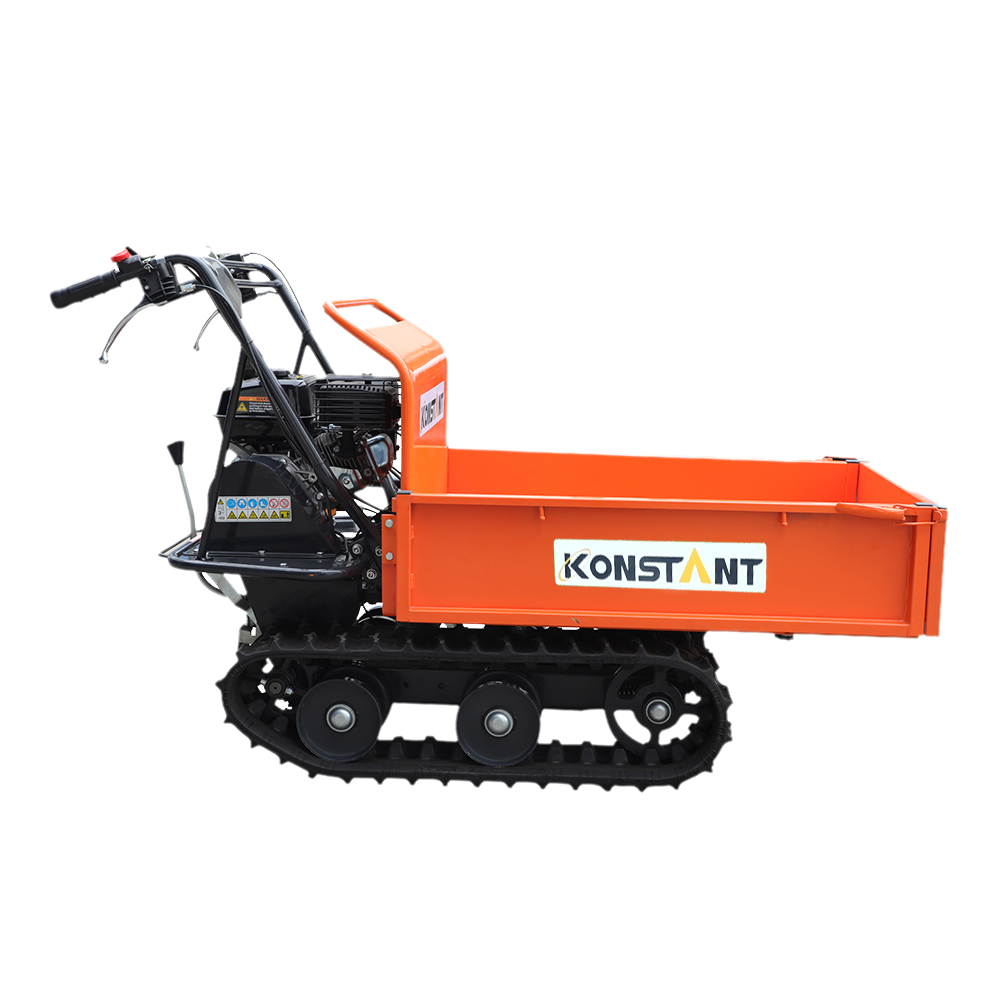
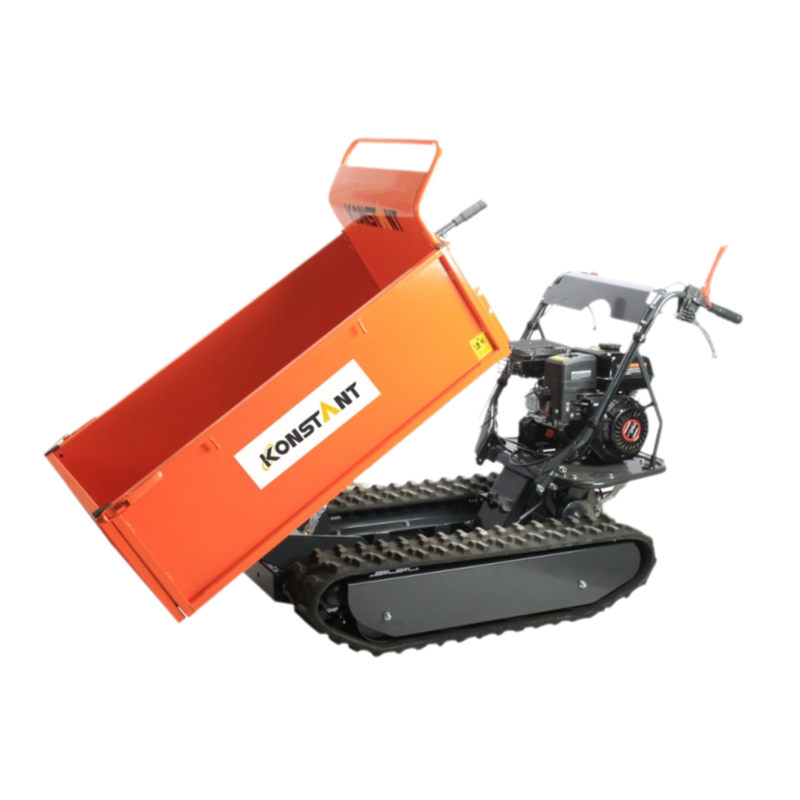
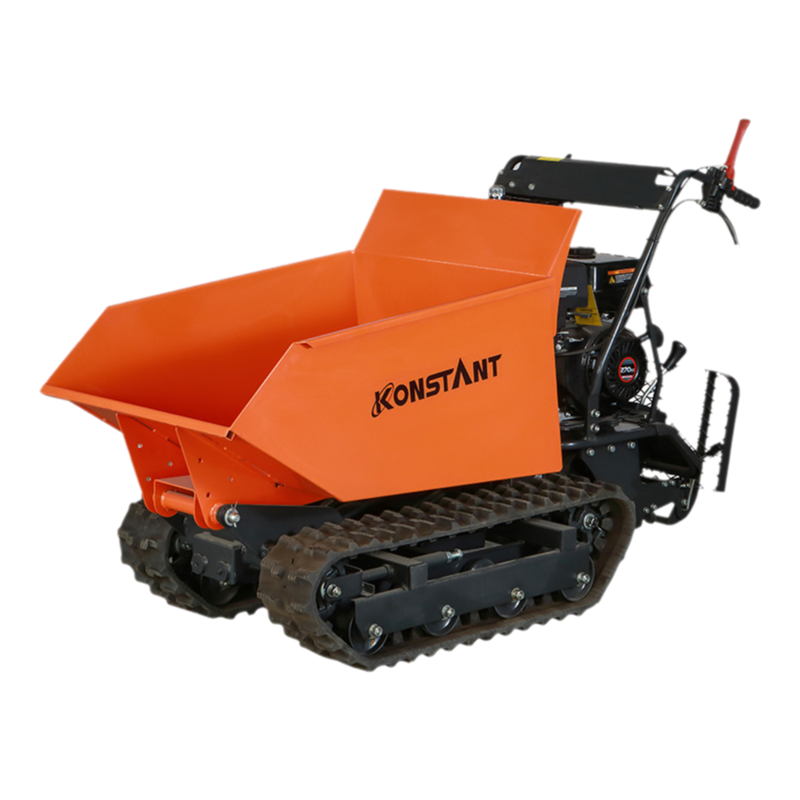
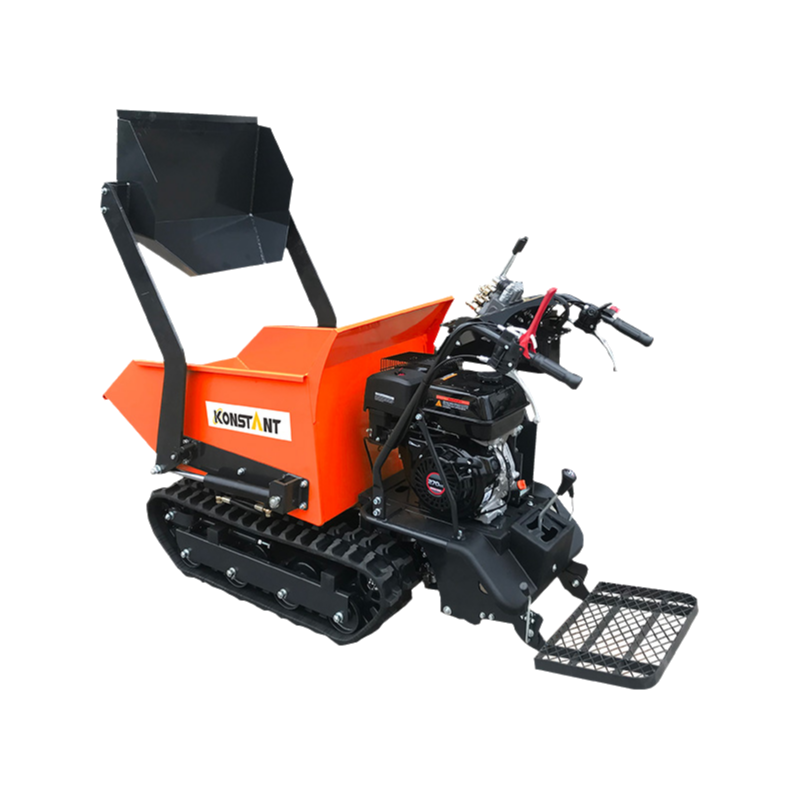
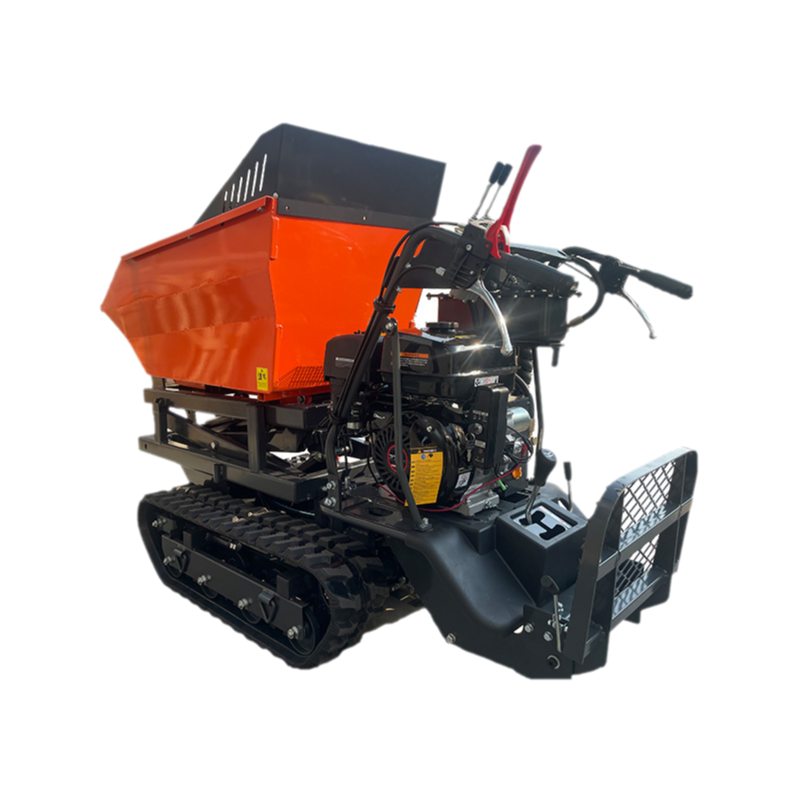
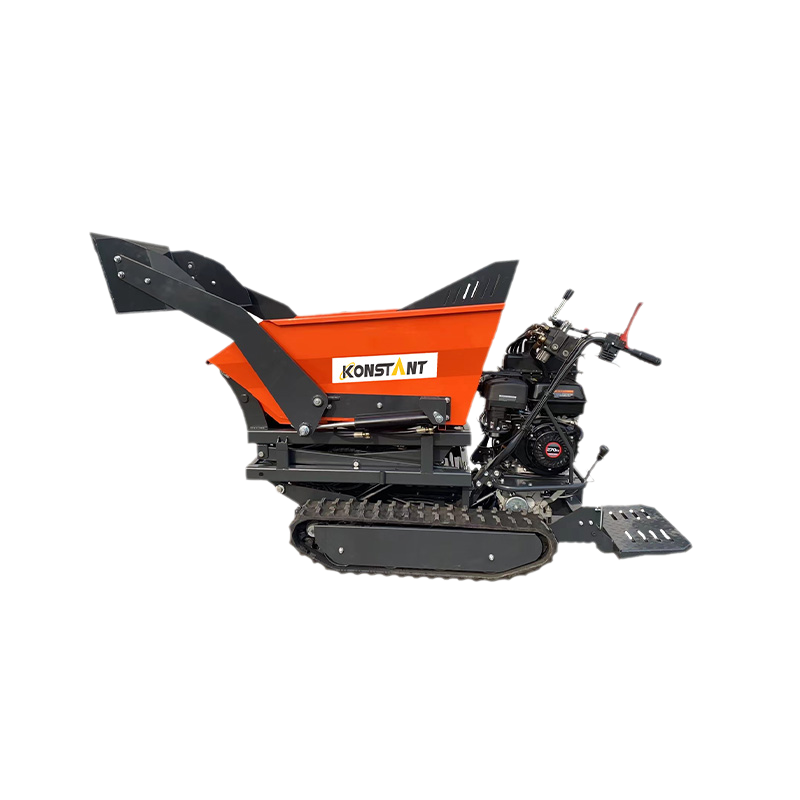
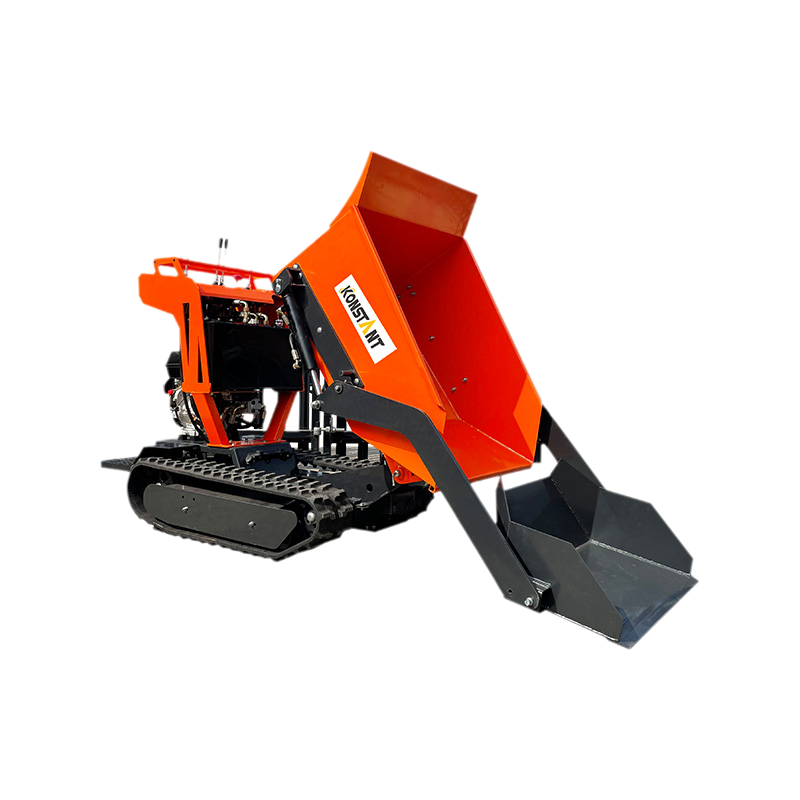
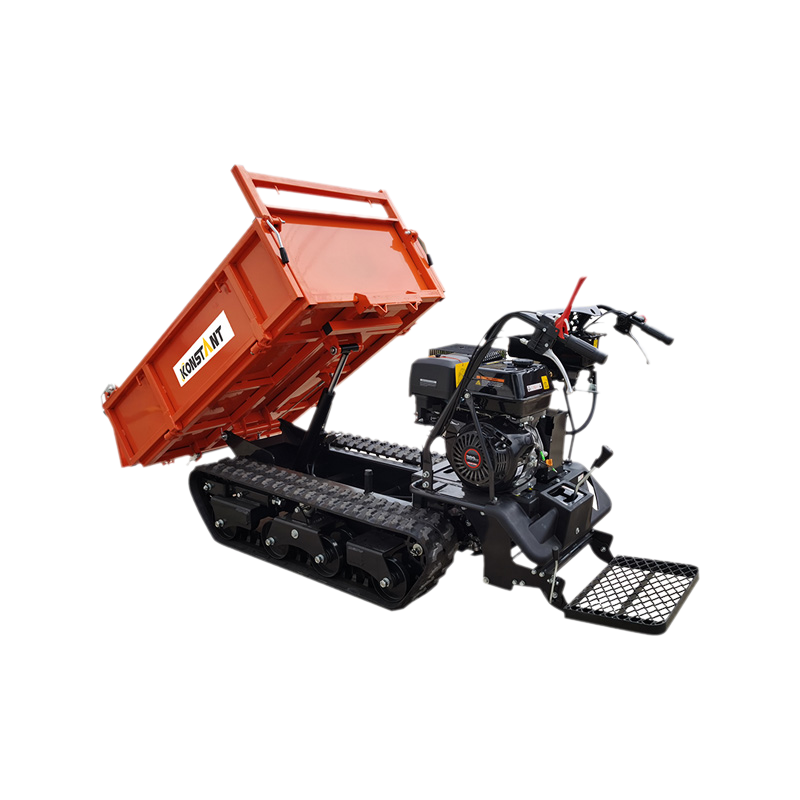
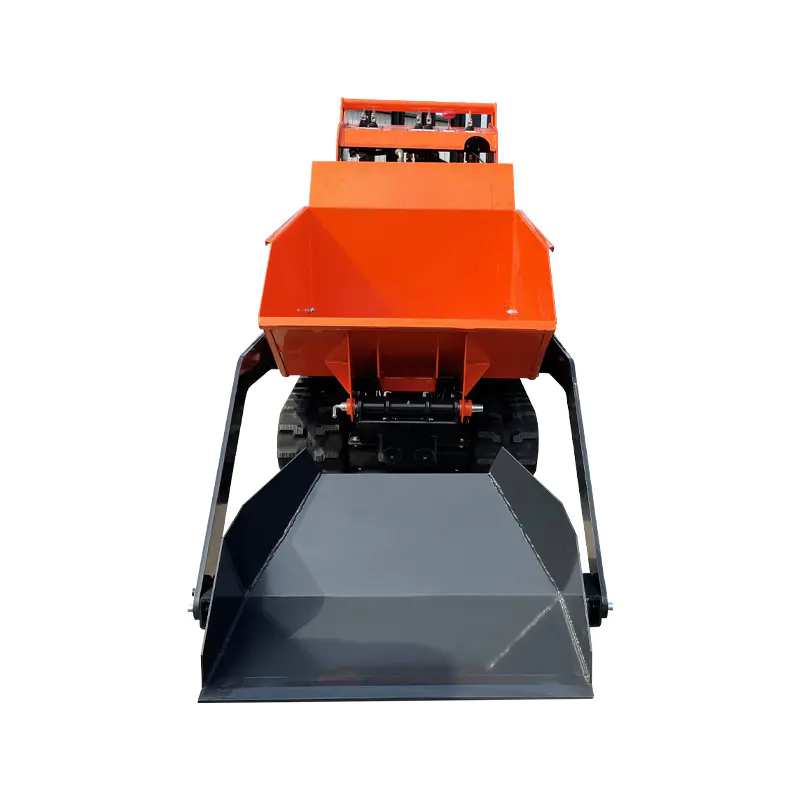
A self loading, fully hydrostatic crawler mini dumper can be supplied with either a petrol or a diesel engine according to the versions offered. Shared features include powered loading into the skip, tracked travel for outdoor ground and hydrostatic drive for controlled movement. Engine choice sits on top of that common chassis and working layout. A Self Loading Mini Dumper in this form is aimed at buyers who want loading and carrying combined and then select fuel type to match the site.
Petrol Engine Configuration
The petrol version is intended for users whose fuel supply and service arrangements support petrol operation. Starting method and day-to-day checks follow the engine documentation supplied with the machine. Suitability still depends on hours, load and environment, not only on the presence of a petrol tank.
Diesel Engine Configuration
The diesel version is intended for users whose fuel and maintenance setup favour diesel. Operating and service points follow that engine's manual, with attention to fuel quality and filter condition in dusty work.
Self loading reduces reliance on separate loading labour for suitable bulk materials. Crawler tracks support travel on uneven outdoor surfaces within the machine's limits. Fully hydrostatic drive underpins travel and working control as designed. Payload, dimensions and operating limits are those stated for the complete machine and must be respected regardless of fuel type. A Mini Crawler Dump Truck with these traits is specified by chassis and loader function first, then by engine variant.
Choosing the Engine Version for the Job
Local fuel availability and refuelling rules come first. Daily hours, material weights and access to the correct service skills come next. The engine version should be the one that the site can fuel and maintain without improvisation, while the chassis and loading system match the actual bulk handling task.
Selecting Fuel Type Without Ignoring the Whole Machine
Petrol and diesel mini dumpers differ mainly in fuel logistics, service routines and how they fit long versus intermittent duty. Neither type replaces checks on load rating, tracks, hydrostatic drive and self-loading suitability. WUXI KONSTANT POWER TECH CO., LTD produces compact tracked dumpers with petrol and diesel engine options for material movement on confined outdoor sites. Review of fuel supply, maintenance support, operating hours and machine specification against real site conditions supports selection of an engine version that fits both the work and the way the equipment will be supported day to day.
Related products

Latest Updates
-
Petrol vs. Diesel Mini Dumper: Which Engine Type Suits Your Work
Why Engine Type Matters When Choosing a Mini Dumper Understanding the Role of the Engine The engine ...
-
How a Self Loading Mini Dumper Reduces Manual Material Handling
Why Manual Material Handling Is Difficult on Construction Sites Physical Effort Required for Moving ...

-
Welcome To Visit Us
No.30, Third Furong Road, Wuxi City, Jiangsu. 214100, China.
-
Call Us
Phone: +86 181-1889-1139
Phone: +86 181-1889-2139
-
Contact Us Online
E-mail: sales@konstantpm.com
E-mail: marketing@konstantpm.com
Copyright WUXI KONSTANT POWER TECH CO., LTD All Rights Reserved
 China Mini Dumpers Manufacturers Power Wheelbarrow Factory