
 English
 русский
 Français
 Español
 Deutsch


Provide you with the latest enterprise and industry news
Home / News / Industry news / What are the Benefits of a Mini Dumper with Hydraulic Tipping and a Front Shovel
What are the Benefits of a Mini Dumper with Hydraulic Tipping and a Front Shovel
Update:16-11-2026
Posted by Admin
Content
- 1 Easier Material Loading with an Attached Front Shovel
- 2 Convenient Unloading Through Hydraulic Tipping of the Skip
- 3 Combined Loading and Transport Functions on One Machine
- 4 Improved Work Efficiency on Confined Construction Areas
- 5 Greater Flexibility Across Landscaping and Small Project Tasks
- 6 Reduced Manual Work and More Convenient Daily Operation
- 7 Task Stages and Machine Contributions
- 8 Operating Practice That Preserves the Benefits
- 9 Loading, Hauling and Tipping in One Compact Workflow
Easier Material Loading with an Attached Front Shovel
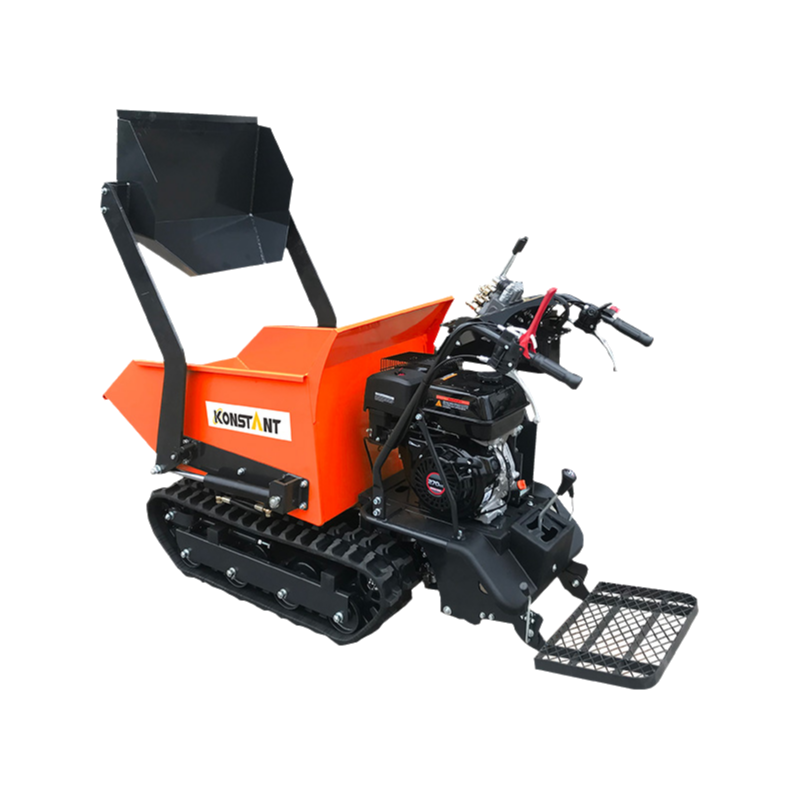
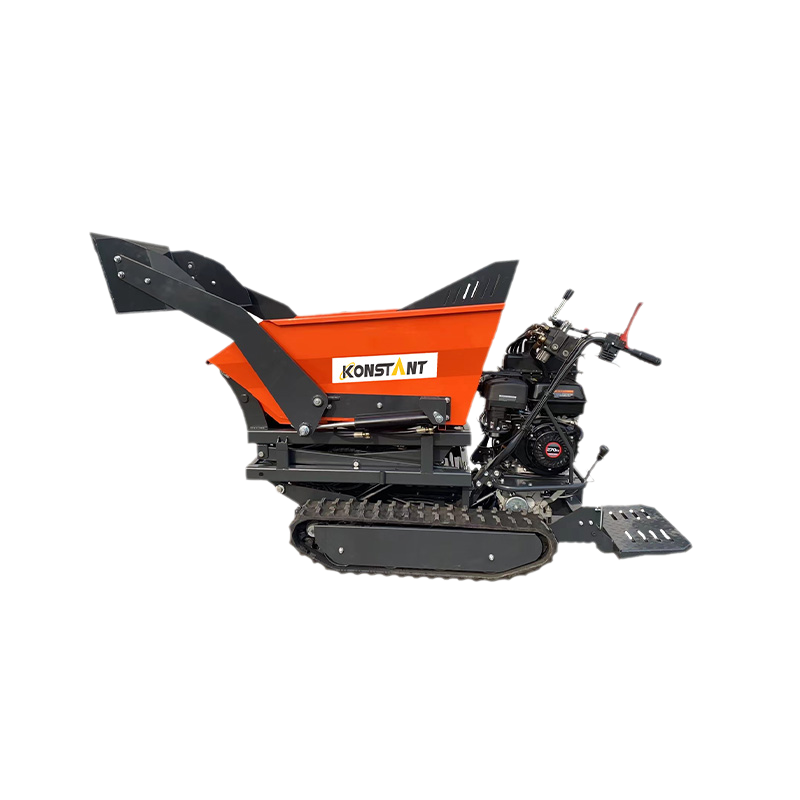
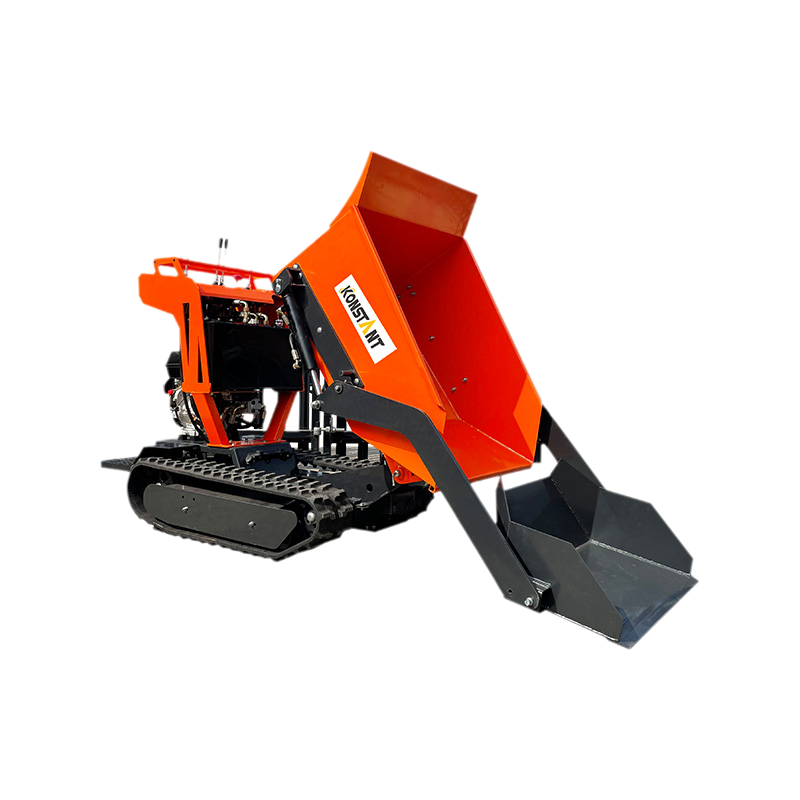
Loose soil, sand, gravel and mixed construction debris often sit in piles or shallow layers on the ground. A front shovel mounted on a mini dumper lets the machine push into those materials, lift a portion and deposit it into the skip or hopper without every scoop being lifted by hand. That mechanical collection cuts the number of shovel cycles people must perform before the machine is ready to travel.
Combining collection and transport on one chassis means the same unit that gathers material can immediately carry it. The workflow stays on the machine rather than alternating between a separate loader and a passive cart. Convenience appears on small sites where bringing a second powered machine is impractical and where paths are too narrow for larger plant.
Convenient Unloading Through Hydraulic Tipping of the Skip
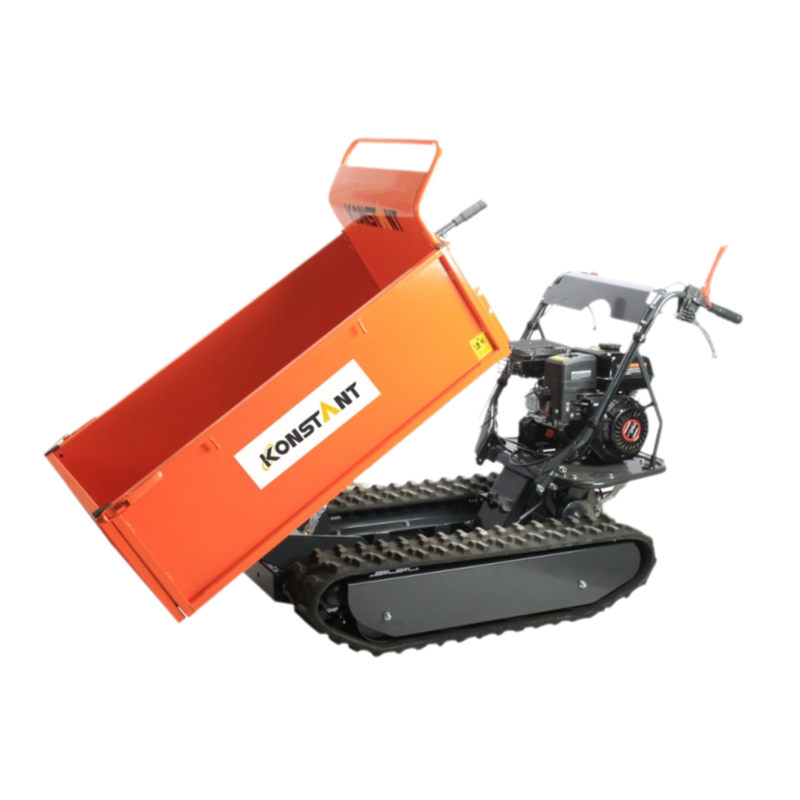
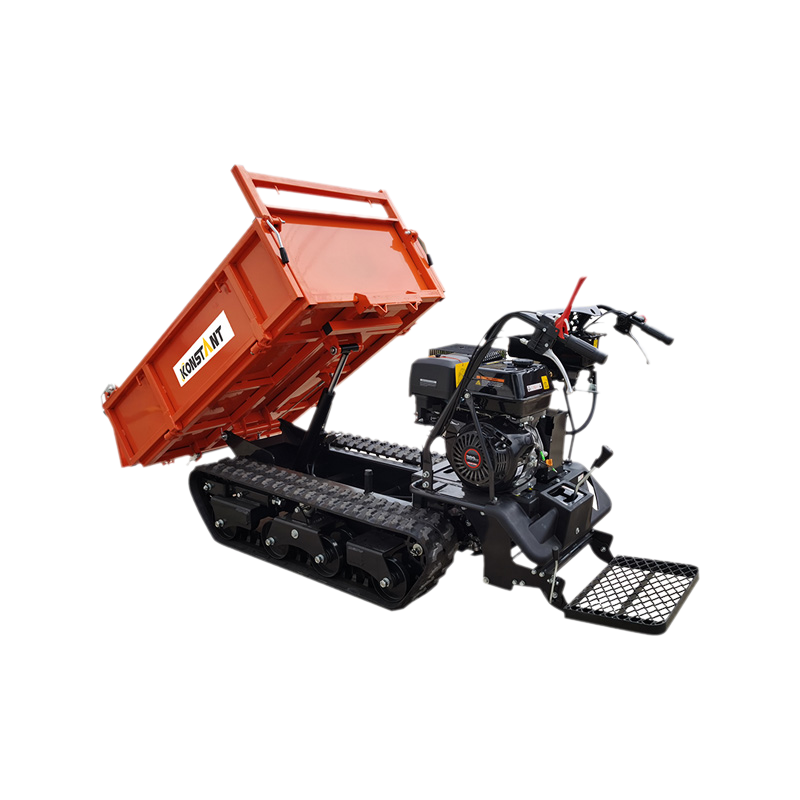
Once material is in the dumper body, it must leave again at the stockpile, trench or truck. A hydraulic tipping system raises and tilts the body so that gravity empties the load. The operator controls the motion from the working position rather than releasing tailgates and shovelling residual heaps by hand after every trip.
Hydraulic operation makes unloading more convenient than purely manual emptying, especially with dense or damp loads that stick to the floor. Usefulness shows when materials move repeatedly between work faces: each tip is a short, controlled action instead of a long physical task. Stable ground and correct body position before tipping remain part of safe routine.
Combined Loading and Transport Functions on One Machine
The front shovel and the dumper body form a short cycle: gather, load, travel, tip, return. Working together, they reduce the need to switch between a standalone shovel, a wheelbarrow and a tipping trailer. For small construction and landscaping projects, that integration keeps the crew's equipment list shorter and the sequence easier to supervise.
Practical value sits in the unbroken chain from ground to discharge point. Time that would be spent fetching another tool or double-handling the same pile is spent moving the next load. The integrated loading and dumping design is aimed at sites where scale does not justify a separate excavator and dump truck pair, yet manual methods alone are too slow.
Improved Work Efficiency on Confined Construction Areas
On tight plots the shovel gathers what is within reach of the machine's approach, while the dumper carries and unloads without requiring a wide turning circle for large plant. Repeated material-handling operations—trenching spoil, bedding sand, demolition rubble—become a series of short machine cycles rather than long chains of barrow runs.
Moving soil, stones, sand and similar materials around confined construction areas benefits when the same operator can load and haul without waiting for a second machine. Efficiency is the reduction of idle waiting and redundant lifts, not unlimited speed regardless of ground condition. Path planning and respect for soft edges still govern how much work is completed in a day. A Hydraulic Mini Dumper with tipping and shovel functions is typically judged on how cleanly that cycle repeats under real site constraints.
Greater Flexibility Across Landscaping and Small Project Tasks
The front shovel assists in gathering loose materials from the ground for garden beds, driveway bases or farm track repairs. Hydraulic tipping supports placement at designated piles, backfill zones or intermediate stock areas. The same machine can therefore serve landscaping, garden renovation, farm maintenance and small construction projects when the material is suitable and the terrain is within the machine's design limits.
Adaptability depends on matching attachment use and tip angle to the material—dry sand flows differently from wet clay—and on not treating the shovel as a heavy excavation tool beyond its intended duty. Flexibility is a range of light bulk tasks, not a substitute for dedicated digging plant on deep or compacted ground.
Reduced Manual Work and More Convenient Daily Operation
Mechanical loading assistance reduces the physical effort of collecting materials into a transport body. Hydraulic tipping simplifies the unloading process so that operators spend less time on repetitive lifting and heaving at the discharge point. Combining the two functions creates a more convenient workflow for regular material transportation tasks when the machine is maintained and used within its rated purpose.
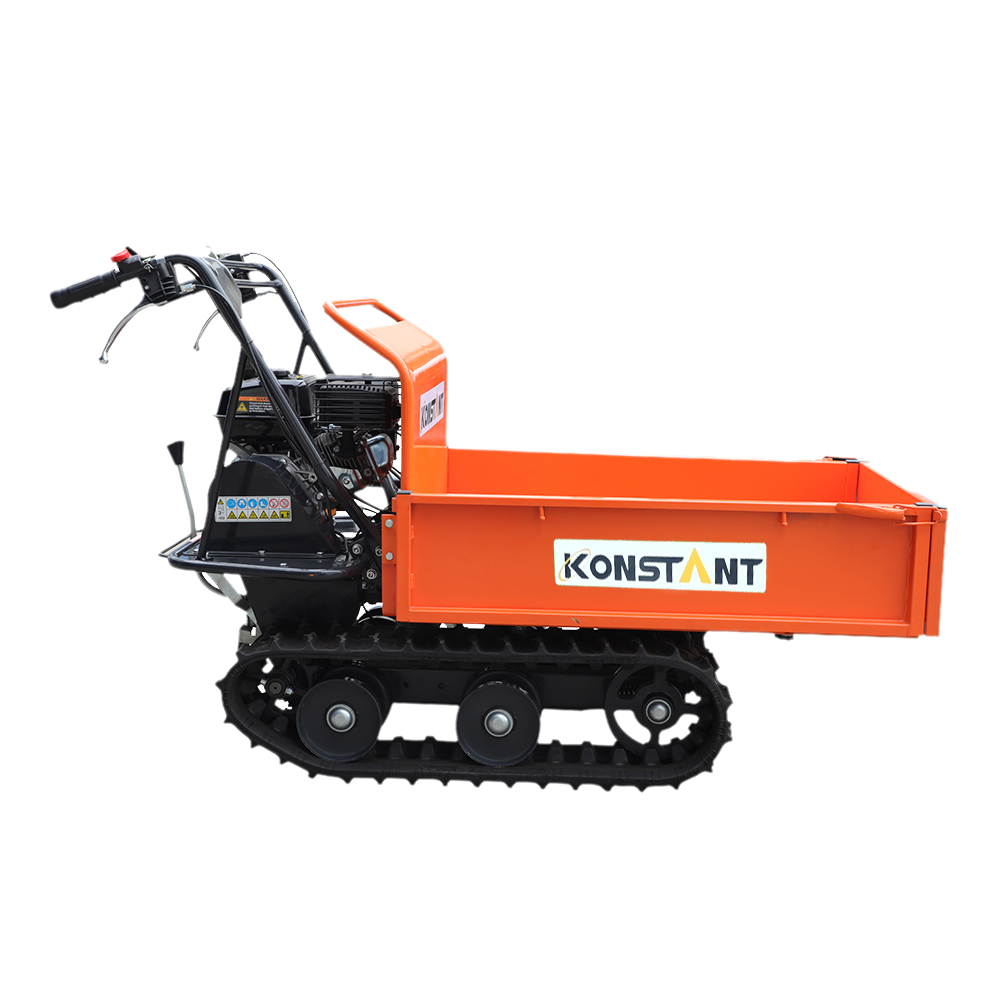
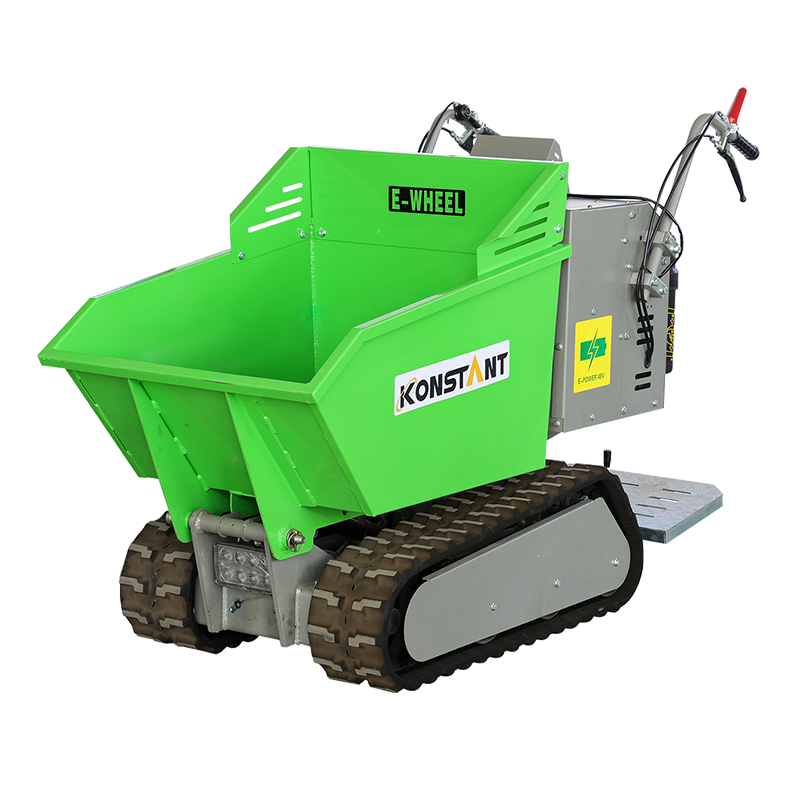
Less manual work does not mean unattended operation. Steering, loading judgment, tip-ground selection and awareness of bystanders remain human responsibilities. Convenience is the lighter physical load and the clearer sequence, which support longer productive periods without the same level of strain associated with purely manual methods. Crawler Mini Dumper layouts, where tracks are used, often add stability on soft ground while the shovel and tipper handle the material path.
Task Stages and Machine Contributions
| Work stage | Machine contribution | Site note |
|---|---|---|
| Collecting loose material | Front shovel gathers into the body | Approach piles carefully; avoid buried obstacles |
| Transport between areas | Loaded skip travels under operator control | Respect slopes and soft edges |
| Unloading at destination | Hydraulic tip empties the body | Tip on stable ground; control surge of material |
| Return for next load | Empty machine goes back to the source | Keep paths clear for repeated cycles |
| Mixed small-project duties | Same unit serves several material types | Match duty to shovel and tipper design limits |
| Labour pattern | Fewer pure manual shovel–barrow cycles | Supervision and training still required |
Operating Practice That Preserves the Benefits
Benefits hold when loads stay appropriate for the chassis, when the shovel is used for loose material rather than prying rock, and when hydraulic hoses, pins and tip stops are inspected as part of ordinary care. Working on ground that supports the machine's weight and width avoids bogging and tip-over risk. Clear separation between machine paths and foot traffic protects the convenience the equipment is meant to provide.
Loading, Hauling and Tipping in One Compact Workflow
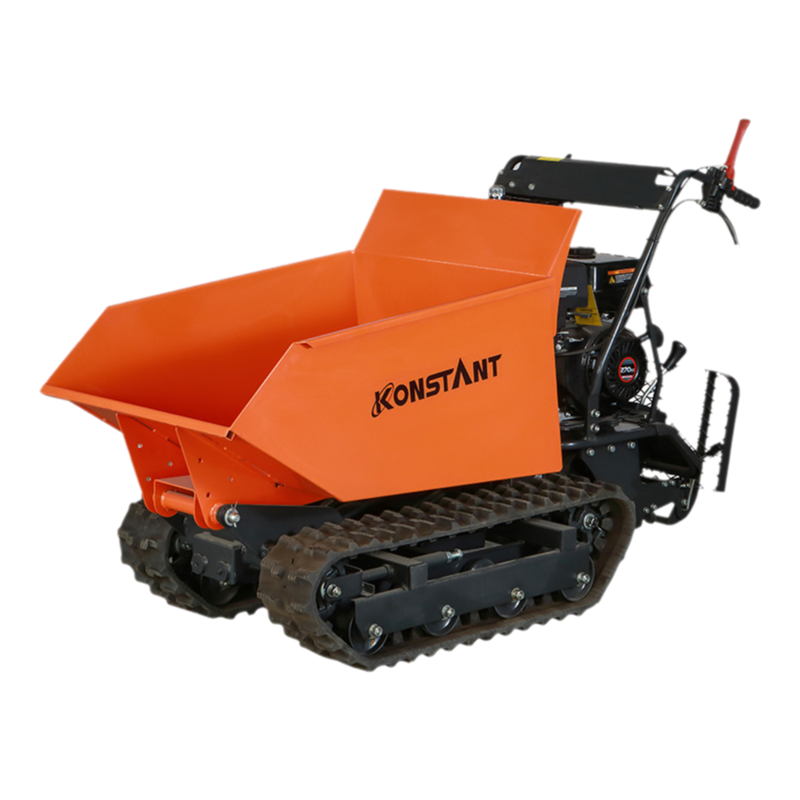
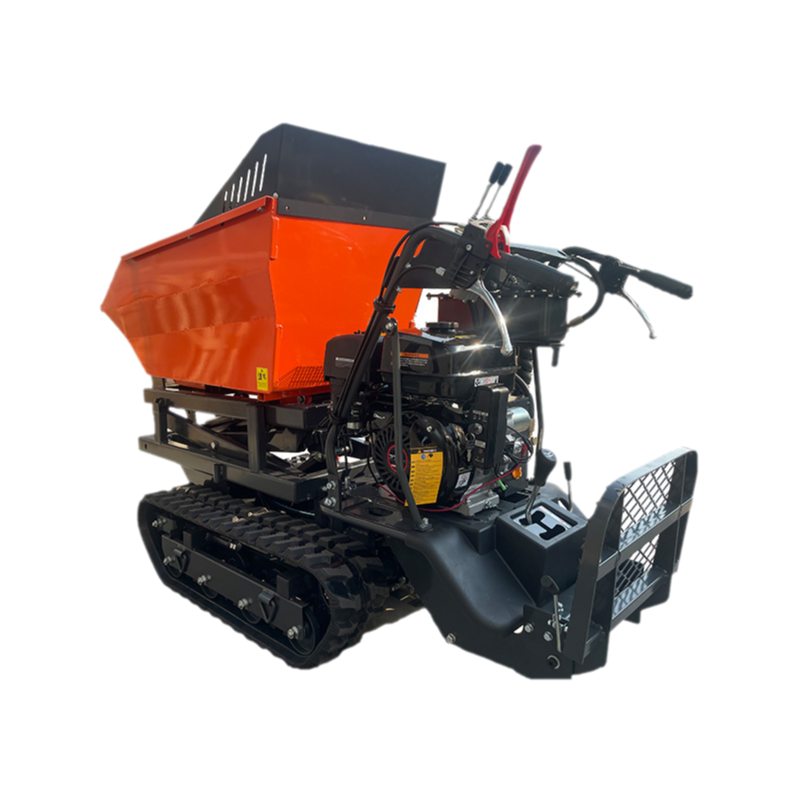
A mini dumper with hydraulic tipping and a front shovel benefits material handling by easing loading, simplifying unloading, combining collection and transport, improving cycle efficiency on confined sites, covering varied light bulk tasks and reducing pure manual effort. WUXI KONSTANT POWER TECH CO., LTD produces mini dumpers including configurations with hydraulic tipping and front shovel arrangements for construction, landscaping and related material movement. Review of typical materials, path widths, ground conditions and unloading points against machine design supports selection of a unit suited to integrated loading and dumping on small to medium sites.
Related products

Latest Updates
-
What are the Benefits of a Mini Dumper with Hydraulic Tipping and a Front Shovel
Easier Material Loading with an Attached Front Shovel Loose soil, sand, gravel and mixed constructio...
-
Petrol vs. Diesel Mini Dumper: Which Engine Type Suits Your Work
Why Engine Type Matters When Choosing a Mini Dumper Understanding the Role of the Engine The engine ...

-
Welcome To Visit Us
No.30, Third Furong Road, Wuxi City, Jiangsu. 214100, China.
-
Call Us
Phone: +86 181-1889-1139
Phone: +86 181-1889-2139
-
Contact Us Online
E-mail: sales@konstantpm.com
E-mail: marketing@konstantpm.com
Copyright WUXI KONSTANT POWER TECH CO., LTD All Rights Reserved
 China Mini Dumpers Manufacturers Power Wheelbarrow Factory