
 English
 русский
 Français
 Español
 Deutsch

Provide you with the latest enterprise and industry news
Can a Mini Petrol Power Dumper Replace a Traditional Wheelbarrow
Update:11-09-2026
Posted by Admin
Content
- 1 Why Does the Traditional Wheelbarrow Remain So Widely Used?
- 2 How Does a Mini Petrol Power Dumper Approach Material Handling Differently?
- 3 Could a Mini Petrol Power Dumper Replace a Wheelbarrow on Construction Sites?
- 4 Is a Mini Petrol Power Dumper More Suitable for Landscaping Work?
- 5 How Does Terrain Change the Wheelbarrow Versus Dumper Decision?
- 6 Can a Mini Petrol Power Dumper Reduce Repetitive Physical Work?
- 7 What Makes a Wheelbarrow a Better Choice in Some Situations?
- 8 When Could a Mini Petrol Power Dumper Become the More Practical Option?
- 9 How Should Users Compare Operating and Maintenance Needs?
- 10 Could Both Tools Work Together on the Same Site?
Material handling rarely attracts much attention until it starts taking up a large part of the working day. Moving soil, gravel, sand, garden waste, tools, or building materials may seem like a simple task. On a busy site, however, the same trip can happen again and again.
The traditional wheelbarrow remains a familiar choice because it is straightforward, compact, and easy to keep ready for use. It does not need fuel or a motor. A worker can load it, push it to the required location, empty it, and bring it back.
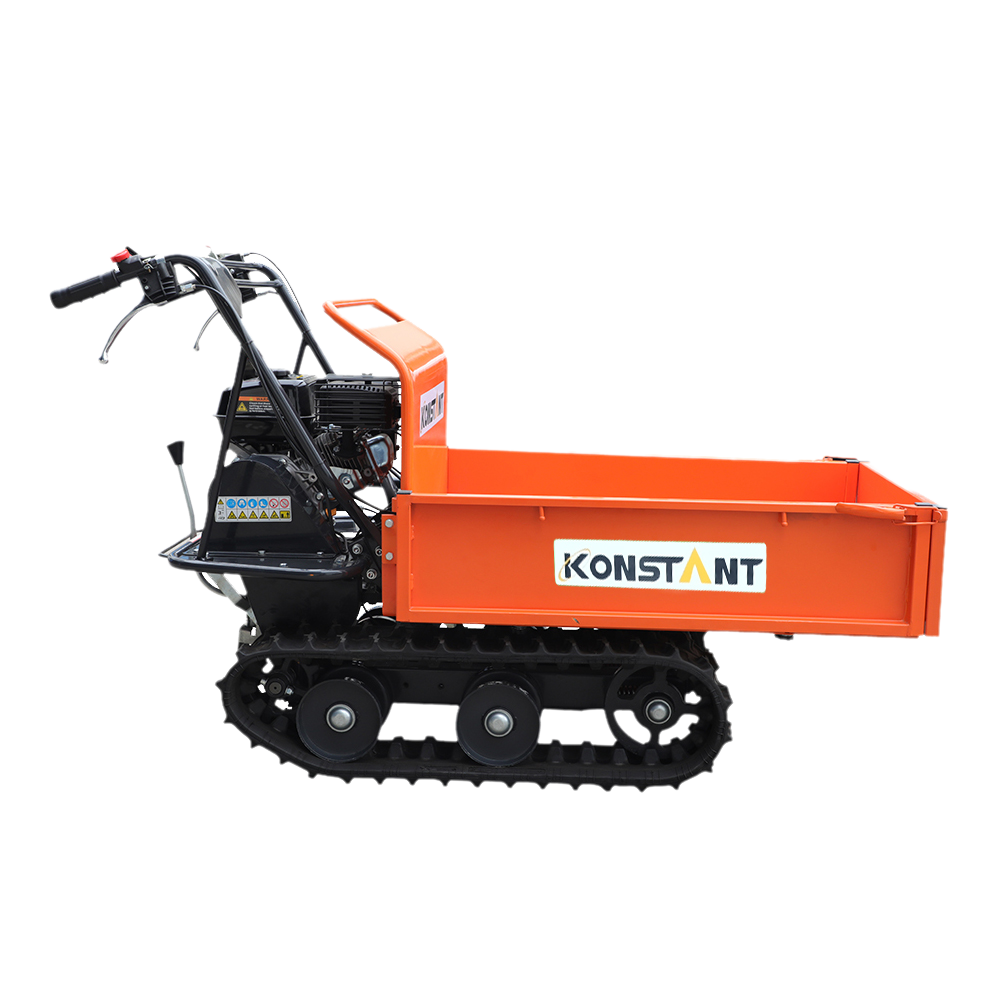
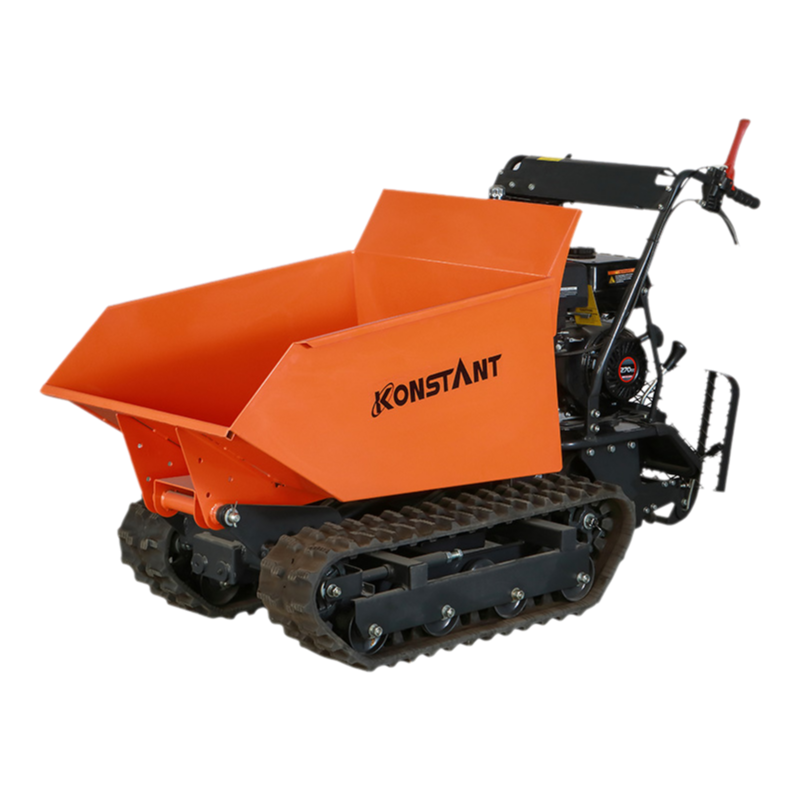
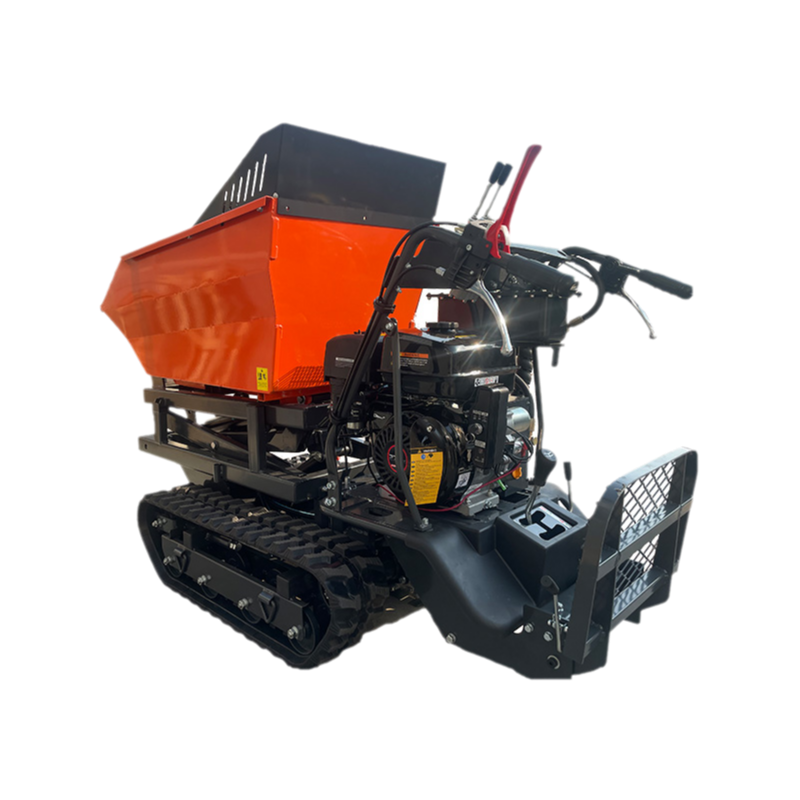
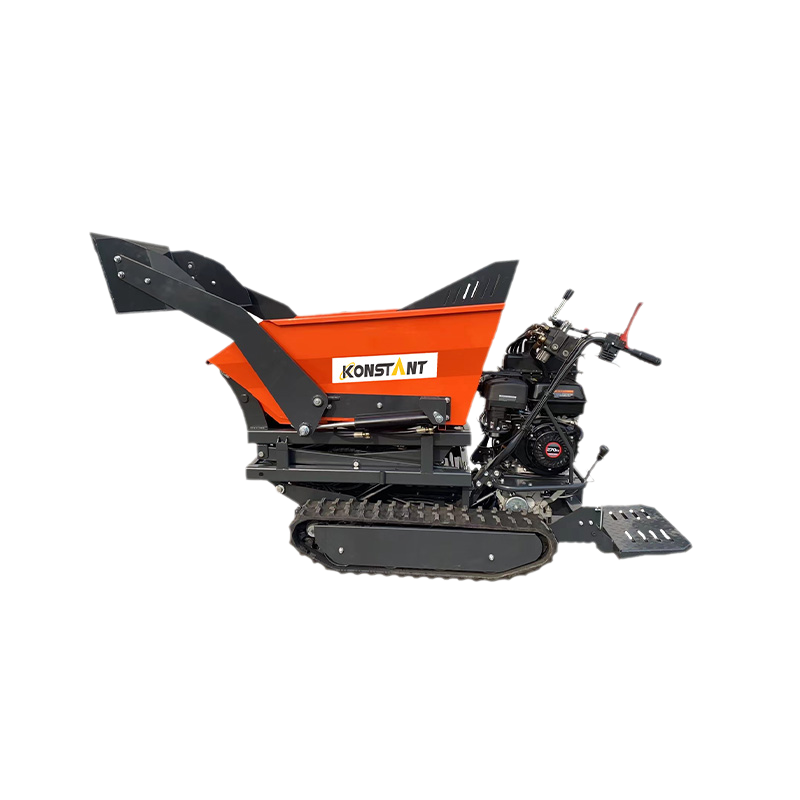
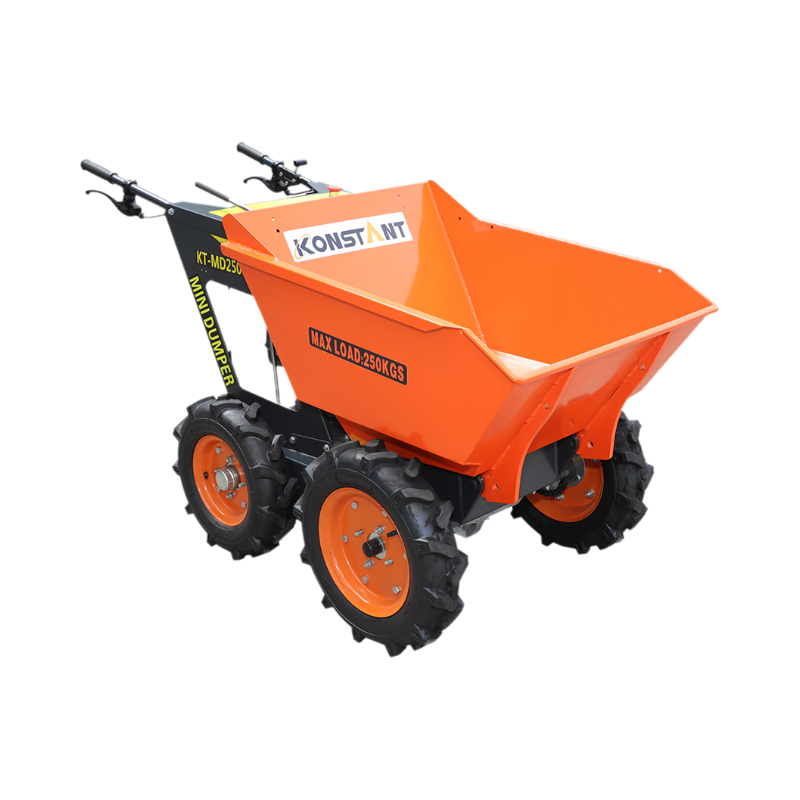
The Mini Petrol Power Dumper approaches the same basic task from another direction. It adds powered movement and a dedicated dumping function to a compact material-handling machine. This can change how workers deal with repeated transport, especially where the ground is uneven or the distance between two work areas becomes inconvenient.
That does not mean a mini dumper automatically replaces every wheelbarrow. The more useful question is where each tool fits. A small garden job may call for a simple wheelbarrow. A demanding site with repeated loads may benefit from powered transport.
Why Does the Traditional Wheelbarrow Remain So Widely Used?
The wheelbarrow has a simple appeal. Its structure is familiar, and most workers do not need much time to understand how it works. It can be moved through narrow spaces and stored without requiring a dedicated parking area.
For small tasks, this simplicity can be valuable. A homeowner moving a small amount of soil around a garden may not need powered equipment. The same can be true for occasional maintenance work where only a few trips are required.
A wheelbarrow also gives the operator direct control over movement. The person provides the pushing force, manages the direction, and decides when to stop. There is no engine to maintain and no fuel to prepare.
Its limitations become more visible when the task is repeated. Moving a heavy load over a long route or across loose ground can require considerable physical effort. Returning for another load means repeating the same process. Over a full workday, a simple transport task can become a demanding part of the job.
Common wheelbarrow applications include:
- Garden maintenance
- Small landscaping tasks
- Light construction work
- Moving compost and soil
- Transporting tools around a property
- Clearing small amounts of waste
The traditional wheelbarrow therefore remains relevant because not every material-handling task requires a motor. Its value comes from simplicity and direct operation.
How Does a Mini Petrol Power Dumper Approach Material Handling Differently?
It is designed to move material with mechanical assistance rather than relying entirely on human pushing. The operator guides the machine while the powered system provides the movement needed to transport the load.
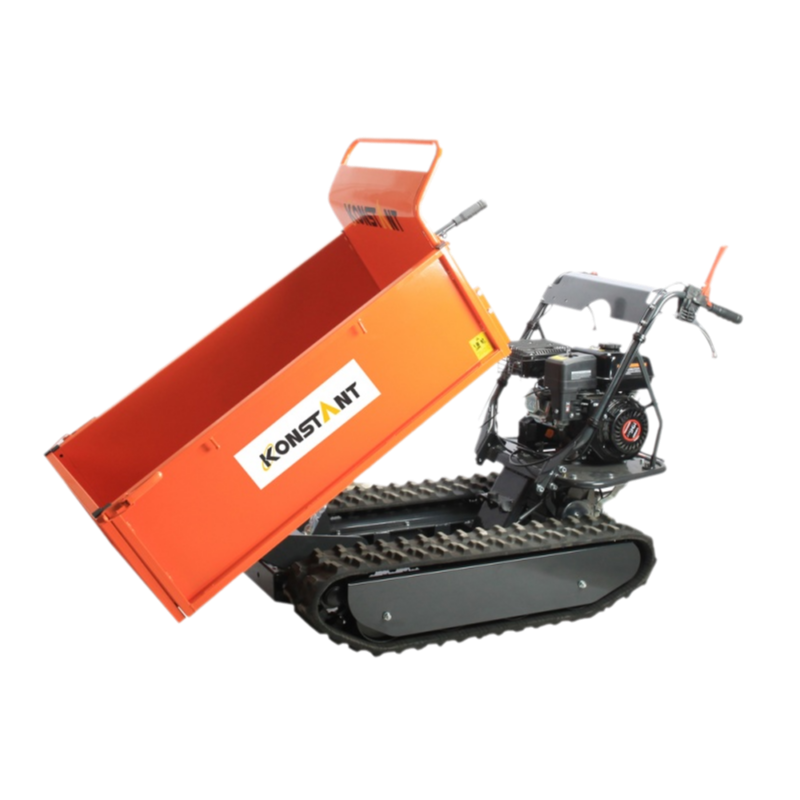
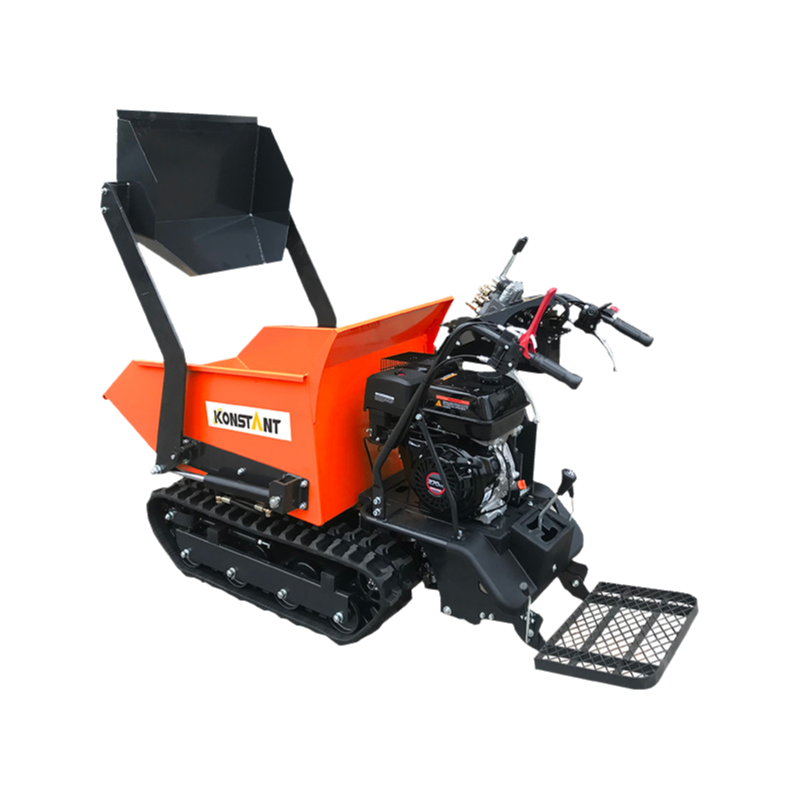
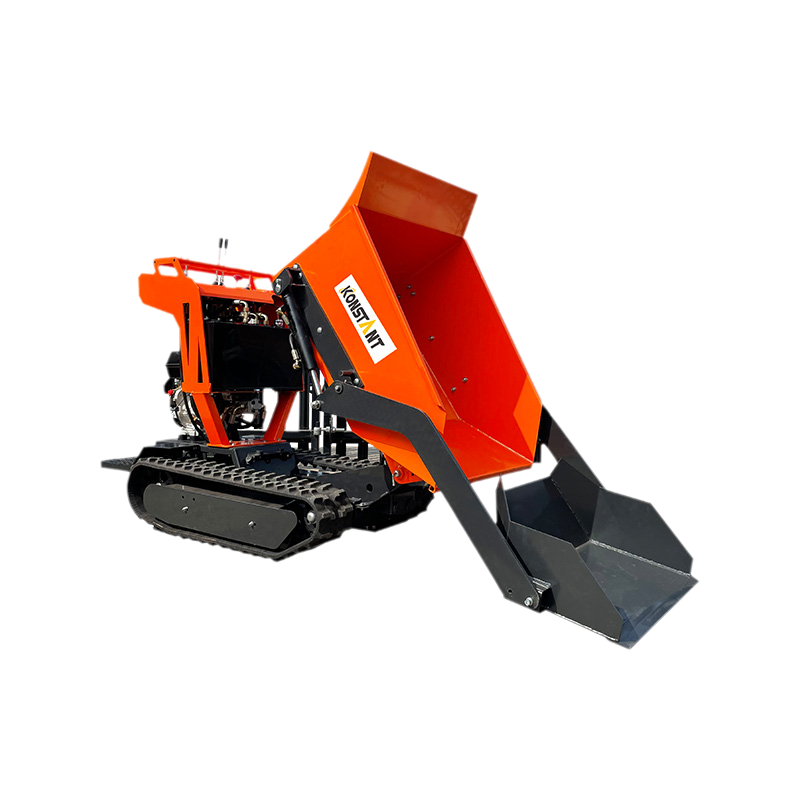
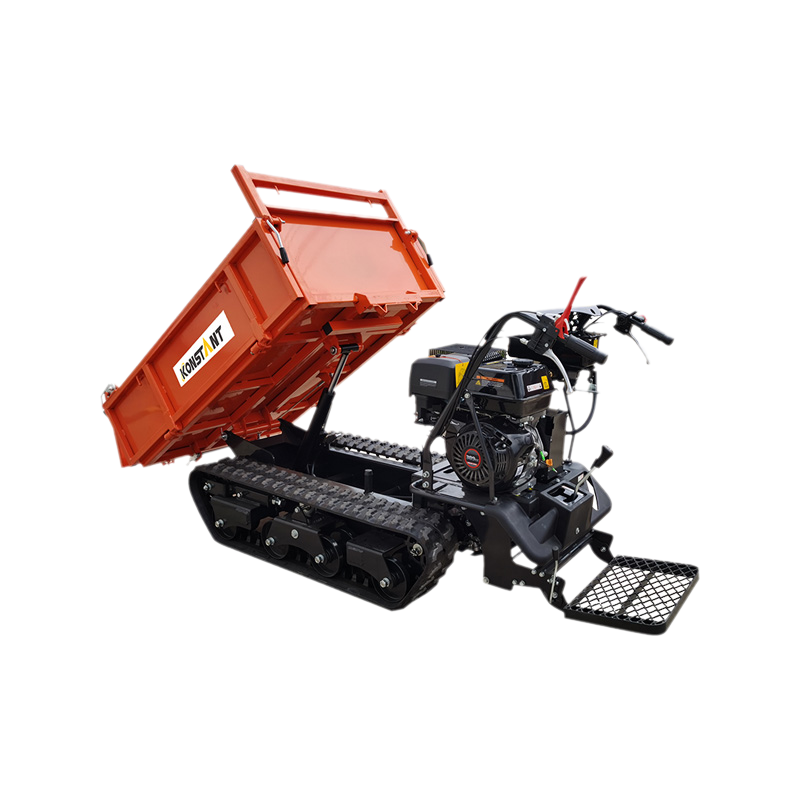
The dumping function adds another difference. Instead of manually lifting or tipping a loaded wheelbarrow, the dumper is designed to help with unloading. The exact method depends on the equipment, but the basic idea is to make loading, transport, and discharge part of a more integrated process.
This can be useful when the same movement is repeated many times. Consider a landscaping project where soil must be moved from a delivery point to several garden areas. With a traditional wheelbarrow, each trip requires the worker to push the load. With a powered dumper, the transport stage can be assisted by the machine.
The operator still has an active role. Steering, positioning, loading, unloading, and checking the route remain important. Powered equipment does not remove the need for careful handling.
The main difference can be viewed this way:
| Traditional Wheelbarrow | Mini Petrol Power Dumper |
|---|---|
| Relies on manual pushing | Uses powered movement |
| Simple operating concept | Requires familiarity with machine controls |
| Suitable for small transport tasks | Designed for repeated material movement |
| Manual unloading | Designed around easier dumping |
| Little routine mechanical care | Requires engine and machine maintenance |
| Easy to store in many locations | Needs suitable storage and care |
Neither approach fits every situation. The working environment determines which option makes more sense.
Could a Mini Petrol Power Dumper Replace a Wheelbarrow on Construction Sites?
Construction work is one area where the difference between the two tools can become noticeable. Building sites often involve repeated movement of soil, sand, gravel, debris, tools, and other materials. The route can also change as the project develops.
A wheelbarrow can handle many of these jobs. Its compact shape can be useful around buildings, gardens, and smaller work areas. Workers can move it through spaces where larger equipment would be inconvenient.
The challenge comes when the same route must be traveled repeatedly. A worker may spend a large part of the day moving material rather than carrying out the main construction task. A powered dumper can shift some of that physical demand from the operator to the machine.
A mini dumper can be particularly relevant when:
- Material needs to be moved repeatedly between work areas.
- The ground is uneven or difficult to push across.
- The project involves a significant amount of loose material.
- Manual transport is becoming a noticeable part of the work routine.
- A compact machine is more suitable than larger construction equipment.
Even then, replacement is not automatic. Narrow corners, very small work areas, or occasional light tasks may still favor a traditional wheelbarrow.
Is a Mini Petrol Power Dumper More Suitable for Landscaping Work?
Landscaping is another setting where the comparison becomes interesting. Landscaping teams may move soil, mulch, stones, branches, planting material, and garden waste throughout a property.
A wheelbarrow remains convenient for smaller garden areas. It can be taken through narrow paths and positioned close to planting beds. It is also easy to use when only a small quantity of material needs to be moved.
Larger landscaping tasks create a different situation. A team may need to transport material across a property many times. Slopes, grass, loose soil, and uneven paths can make manual pushing more tiring.
It can help with the transport portion of this work. Its compact form can be useful when the site does not justify a larger machine but still requires more assistance than a traditional wheelbarrow provides.
The choice can depend on the nature of the project:
- Small garden adjustment: A wheelbarrow may remain convenient.
- Regular soil movement: Powered transport may be worth considering.
- Large landscaping area: A mini dumper can reduce repeated manual pushing.
- Narrow access: Compact dimensions may become important.
- Uneven outdoor ground: The machine should be selected for the actual terrain.
The key issue is not whether landscaping requires a dumper. It is whether the amount and type of material movement justify a powered solution.
How Does Terrain Change the Wheelbarrow Versus Dumper Decision?
Ground conditions can strongly influence material handling. A smooth path is easier to navigate with a wheelbarrow. Loose soil, gravel, grass, mud, or uneven ground can make the same load harder to move.
A traditional wheelbarrow places much of the responsibility on the operator. The person needs to keep the load moving and maintain control while crossing the surface. On a slope, the task may require additional care.
A Mini Petrol Power Dumper can provide powered assistance, but that does not mean every terrain is automatically suitable. The machine must still be appropriate for the surface and working conditions. Operators should follow the equipment manufacturer's instructions and use safe operating practices.
The route itself should be considered before choosing equipment. A compact machine may be useful if the path is narrow but passable. A larger machine may be unnecessary if the task only involves a small amount of material.
Workers can examine:
- Surface condition - Is the route firm, loose, wet, or uneven?
- Slope - Does the path involve noticeable changes in elevation?
- Access - Can the selected machine reach the work area?
- Turning space - Is there enough room to maneuver?
- Destination - Can the material be unloaded where it is needed?
Terrain does not automatically favor powered equipment. It simply makes equipment selection more important.
Can a Mini Petrol Power Dumper Reduce Repetitive Physical Work?
This is where the strongest practical difference may appear. Repetition changes the nature of material handling.
Pushing a wheelbarrow once is not the same as pushing it throughout the day. Repeated trips can make transport a significant physical part of a job. The operator may need to push, steer, stop, unload, turn around, and return to the loading point each time.
A motorized dumper changes the transport stage. The engine supplies movement assistance while the operator guides the machine. This can reduce the amount of continuous pushing required from the worker.
The effect depends on the job. If only a few loads are required, the difference may be limited. If a team spends much of its time moving material, powered assistance can become more meaningful.
It can also change how a team organizes its work. Material can be loaded at one location and transported directly to the area where it will be used. The operator can focus on guiding the machine instead of supplying all the force needed to move it.
Still, physical work does not disappear. Workers must load material, monitor the route, control the machine, and unload safely. The dumper changes the task rather than eliminating human involvement.
What Makes a Wheelbarrow a Better Choice in Some Situations?
It is easy to focus on the advantages of powered equipment and overlook why manual tools remain useful. A wheelbarrow can be the more practical option for many small jobs.
A homeowner working in a compact garden may value the ability to pick up the tool and start immediately. A maintenance worker may need to move a small amount of waste across a short distance. A construction worker may also use a wheelbarrow for quick tasks close to the work area.
There is little benefit in adding a motor when the work itself does not require one.
A traditional wheelbarrow can make sense when:
- The quantity of material is small.
- The transport distance is short.
- The ground is relatively manageable.
- The task is occasional.
- Easy storage is important.
- The operator prefers a simple manual tool.
Cost and maintenance can also influence the decision. A petrol-powered machine introduces an engine and related care requirements. Fuel storage, cleaning, inspection, and routine maintenance become part of equipment ownership.
For occasional use, that additional responsibility may not be necessary.
When Could a Mini Petrol Power Dumper Become the More Practical Option?
The argument for a Mini Petrol Power Dumper becomes stronger when transportation is no longer a minor part of the job. Repeated movement can justify equipment that is designed specifically for material handling.
Construction teams working on active sites may face continuous movement of soil and debris. Landscaping crews may need to transport material across large properties. Agricultural workers may move supplies between different parts of a farm. Property maintenance teams may have to clear and relocate material over uneven outdoor areas.
In these cases, the question is not simply whether a wheelbarrow can complete the task. It probably can. The question is how much repeated effort the task demands and whether powered assistance fits the workflow.
A useful comparison can focus on the whole job:
| Question | Wheelbarrow | Mini Petrol Power Dumper |
|---|---|---|
| Is the job occasional? | Often suitable | May not be necessary |
| Are repeated trips required? | More manual effort | Powered transport can assist |
| Is the route uneven? | Requires more operator input | Machine capability becomes important |
| Is the work area compact? | Often convenient | Compact dumper may also fit |
| Is maintenance simplicity important? | Fewer mechanical requirements | More care is required |
| Is unloading a repeated task? | Manual tipping | Dumping function can assist |
This makes the choice less about replacing one tool with another and more about matching equipment to workload.
How Should Users Compare Operating and Maintenance Needs?
A powered dumper brings additional responsibilities. The petrol engine needs appropriate care, and the machine should be inspected according to the manufacturer's recommendations. Fuel, moving components, controls, wheels or tracks, and the dumping system all form part of the operating routine.
A wheelbarrow is mechanically simpler, but it still needs care. Wheels, handles, the tray, and structural parts can become worn or damaged through regular use. Cleaning after muddy or dusty work can help keep the tool in usable condition.
Storage is another consideration. A manual wheelbarrow can often be stored in a small space. A petrol-powered machine needs a suitable location that protects it from unnecessary exposure and allows routine checks.
Before choosing between the two, users can consider:
- How often will the equipment be used?
- Who will operate it?
- Where will it be stored?
- What type of maintenance can the team manage?
- What kind of material will be transported?
- How difficult is the normal travel route?
- How important is powered assistance for the particular task?
These questions can reveal whether the additional capability of a Mini Petrol Power Dumper fits the actual working environment.
Could Both Tools Work Together on the Same Site?
Replacing a wheelbarrow does not always have to be the goal. Construction and landscaping teams can use different tools for different parts of the same project.
A mini dumper can handle repeated movement between a storage point and a work zone. A wheelbarrow can then be used for smaller movements within the work zone. This approach can be useful when materials need to travel both long and short distances.
For example, a landscaping team could use a Petrol Mini Dumper to move a larger quantity of soil toward a garden area. Once the material is nearby, a worker could use a wheelbarrow to distribute smaller amounts around planting beds.
The same idea can apply to construction. A dumper can transport loose material across the main site, while manual tools can handle detailed placement near walls, foundations, or other restricted spaces.
This mixed approach recognizes that no single tool needs to handle every part of a material-handling process. The traditional wheelbarrow remains useful because it offers simplicity and close control. The Mini Petrol Power Dumper adds powered movement where repeated transport makes manual pushing less convenient.
Related products

Latest Updates
-
What Makes a Small Tracked Dump Truck Practical for Construction Work
Short-distance movement of soil, sand, gravel and demolition debris is a constant requirement on man...
-
What Causes Reduced Performance in an Electric Mini Dumper
Electric mini dumpers sometimes lose speed, range or climbing ability after a stretch of ordinary us...

-
Welcome To Visit Us
No.30, Third Furong Road, Wuxi City, Jiangsu. 214100, China.
-
Call Us
Phone: +86 181-1889-1139
Phone: +86 181-1889-2139
-
Contact Us Online
E-mail: sales@konstantpm.com
E-mail: marketing@konstantpm.com
Copyright WUXI KONSTANT POWER TECH CO., LTD All Rights Reserved
 China Mini Dumpers Manufacturers Power Wheelbarrow Factory