
 English
 русский
 Français
 Español
 Deutsch

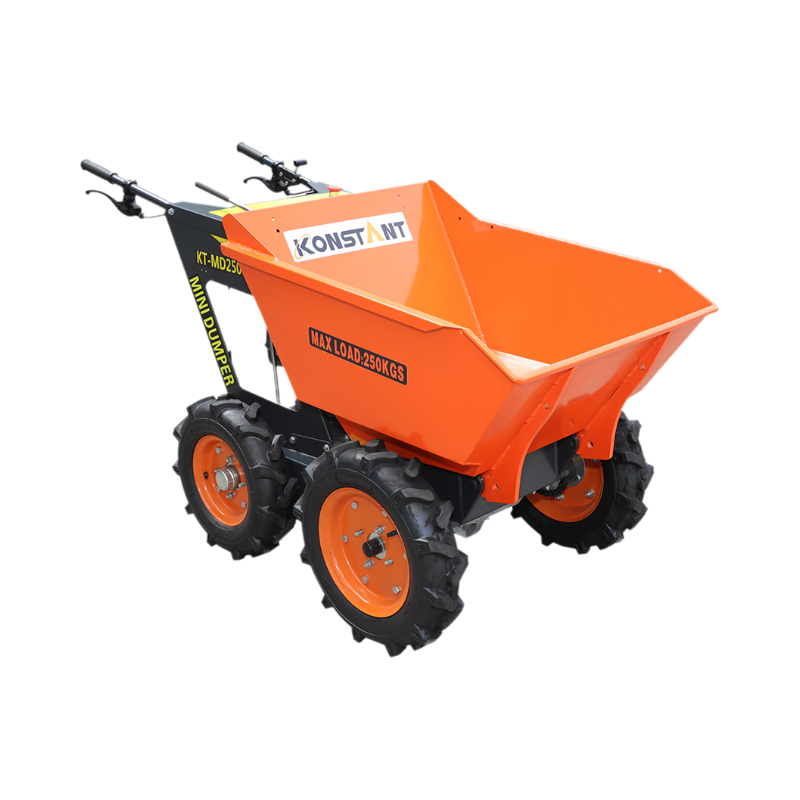
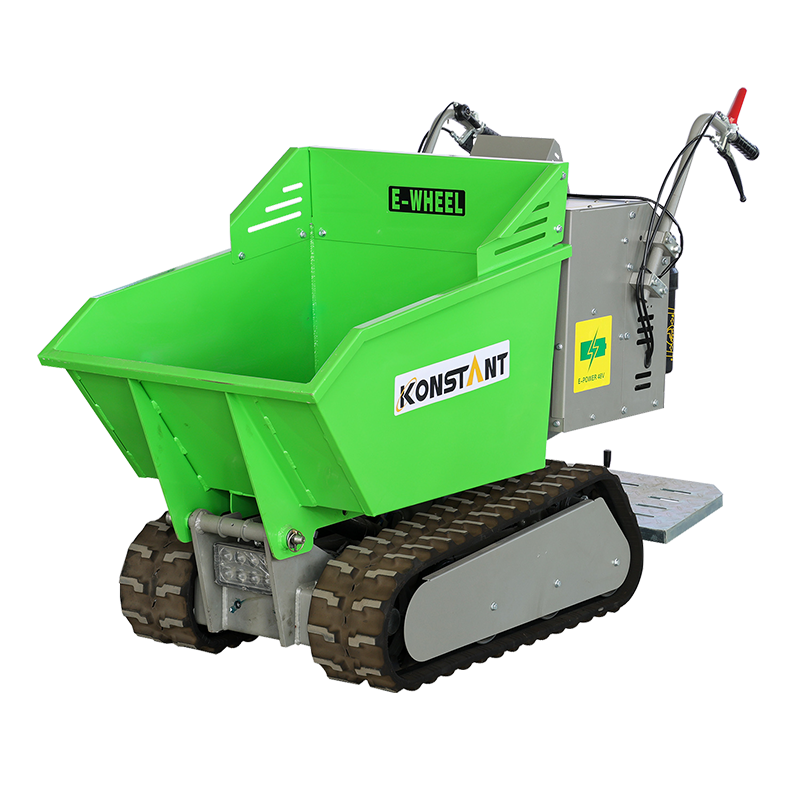
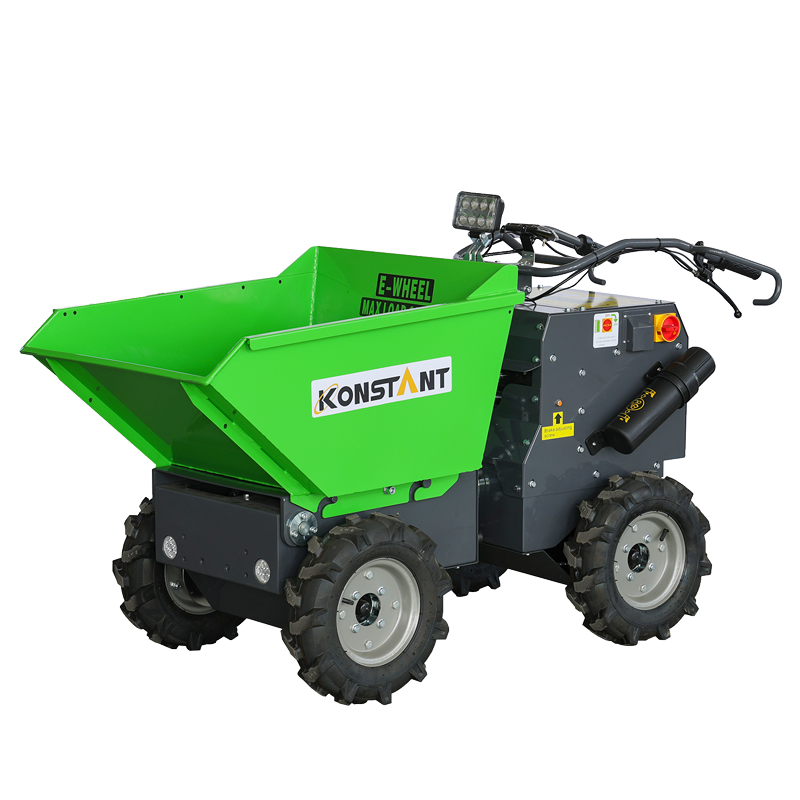
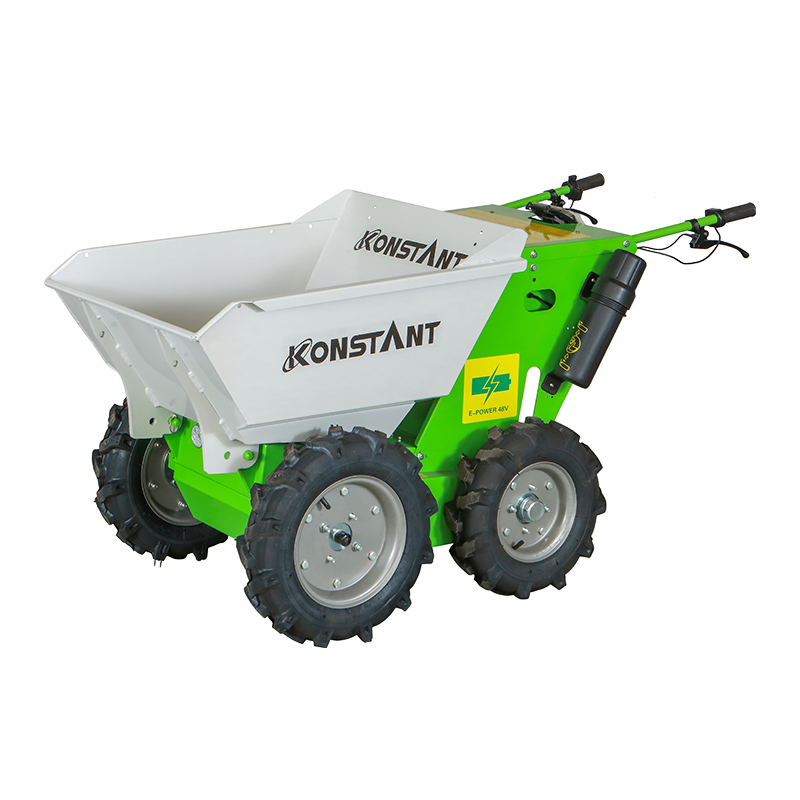
Provide you with the latest enterprise and industry news
Why Choose a Power Barrow Mini Dumper
Update:09-03-2026
Posted by Admin
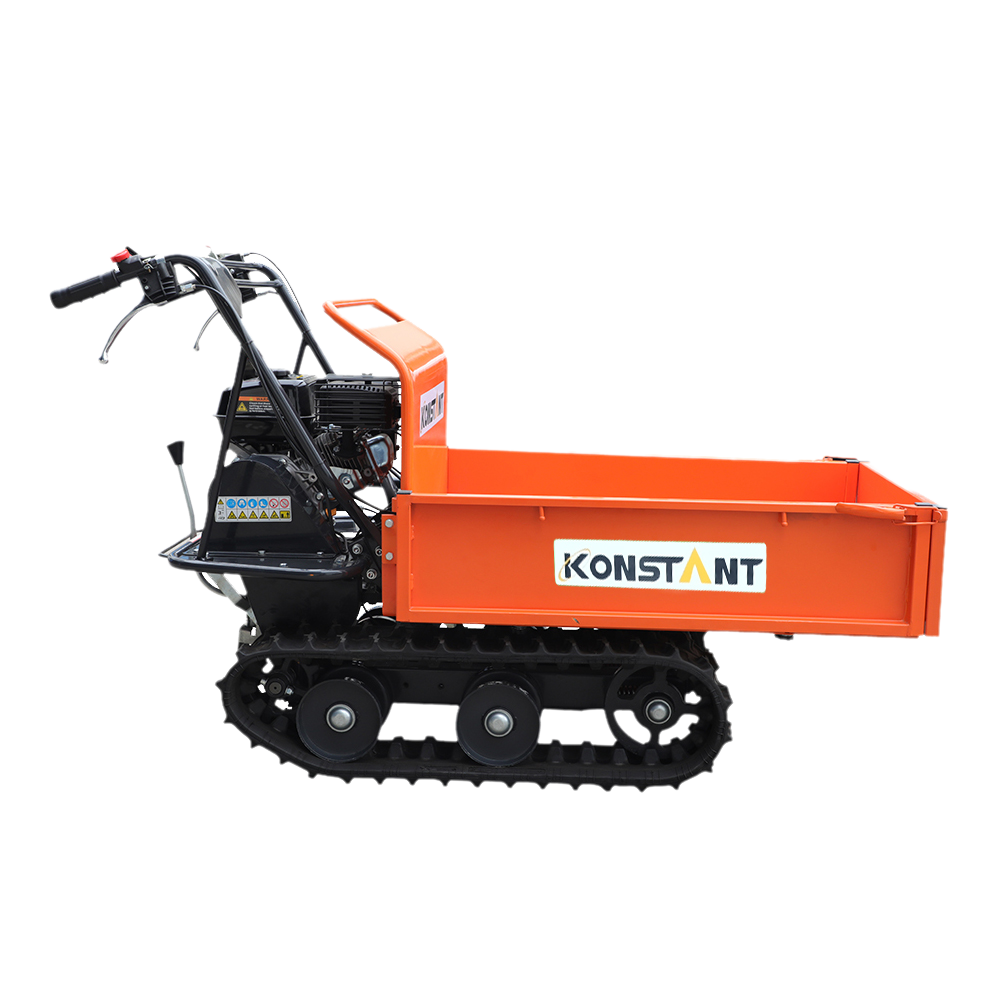
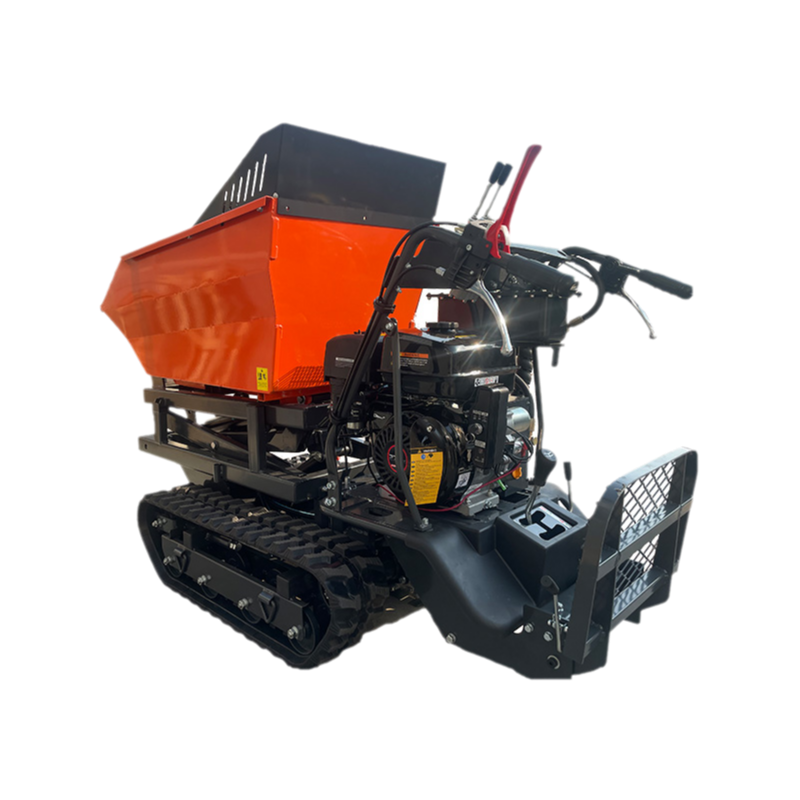
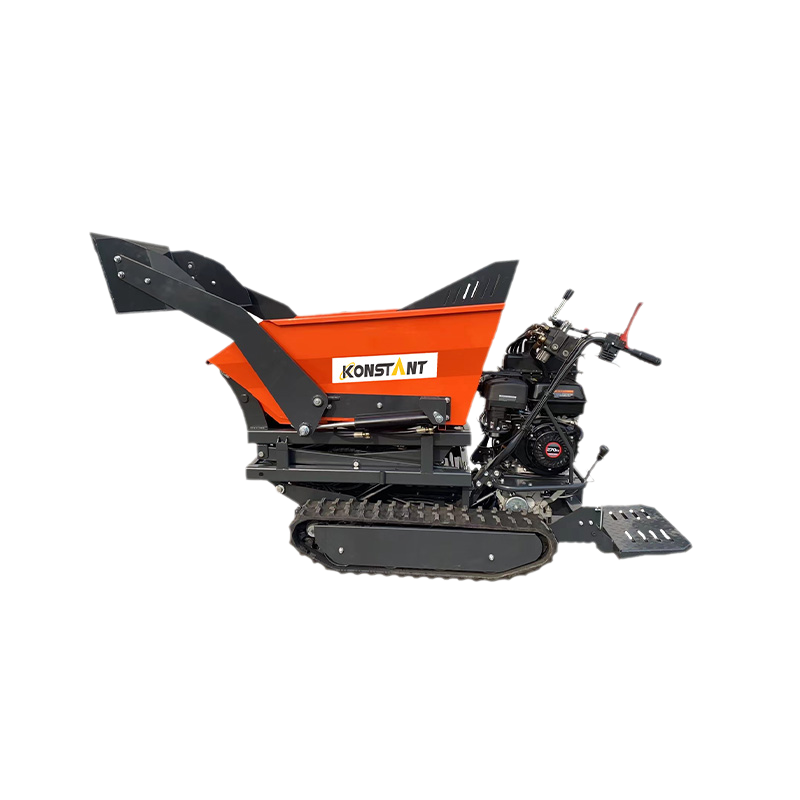
A power barrow mini dumper is a compact, motorised tool that quietly changes the routine of many small job sites by taking the repetitive, short-haul material moves off human shoulders and putting them onto a small machine. Imagine a day where workers no longer ferry loads of soil, brick, or rubble in repeated wheelbarrow trips along narrow alleys, across uneven yards, or up and down basement stairs; instead, an operator loads the carrier, guides it through tight passages, and empties the load with a simple tip or swivel — the time saved on each cycle adds up, fatigue drops, and the crew keeps momentum. That practical trade — swapping manual hauling for mechanised short-haul — is the core reason these compact carriers appear on sites more often. They are not a miracle fix for every material-handling problem, but when the work pattern is dominated by many short trips in constrained spaces, the carrier can change the economics and the daily experience on site.
The basic promise is straightforward: more predictable, repeatable short moves with less physical strain. The machines themselves range from lightweight electric barrows designed to move modest loads in noise-sensitive environments to more robust petrol or diesel units that carry heavier weights for longer periods without recharge.
Undercarriage choices add another practical layer: wheels are economical and fast on firm ground, tracks spread weight and help traverse soft, muddy, or steep terrain. Buyers, operators and site supervisors need to think in practical, site-specific terms.
- How far is a typical run?
- How heavy is a normal load?
- How narrow are the gates and doorways the machine must pass through?
Answer those questions first, and the rest becomes selection and usage detail.
On renovation sites, narrow alleys and stair access make repeated manual trips a productivity sink. A compact carrier often slips through a side gate or down a narrow passage to take rubble out, which avoids disruptive temporary hoists or expensive manual methods. Landscapers use them to move topsoil, mulch, stones and plants across lawns and through gates without the same degree of ground compaction or turf damage that a heavier ride-on dumper would cause. Farms and smallholdings deploy them to move bedding, feed, or harvest around yards where a tractor is awkward. Facility managers in warehouses and event venues rely on electric models to shift heavy items indoors where exhaust-free, low-noise operation matters. The pattern is the same: the machine handles repetitive transfers across short distances or constrained routes where larger machinery simply cannot fit or where manual handling consumes too much labour time.
Practical selection begins with payload. Many models list capacities that seem generous until you consider the real-world density of what you move: a cubic metre of soil weighs far more than a cubic metre of wood chippings. Aim to match the machine to a typical load rather than a theoretical maximum. Repeatedly overloading shortens bearing life, strains drive systems and creates maintenance headaches. If you have runs that require moving unusually heavy items occasionally, plan for that but do not let edge cases drive the primary specification — otherwise you will pay for capacity you rarely use and may accept trade-offs that hurt manoeuvrability.
Distance and duty cycle matter. If the job involves short, frequent trips — for example, a 10–30 metre shuttle repeated dozens of times a day — the mechanical advantage is obvious: the carrier reduces the physical work per trip and maintains a steady pace. In that regime, electrics often suffice and bring the benefit of quiet operation. If you need to run all day at continuous heavy loads with no practical recharging, petrol or diesel will usually be more practical. Battery technology has improved: many modern units can operate a full shift on a charge with sensible management and are particularly attractive for urban or indoor work where emissions and noise limit the use of combustion engines. Still, always check the real duty cycle figures and, for electric models, plan charging or battery swap strategies so the machine is available when you need it.
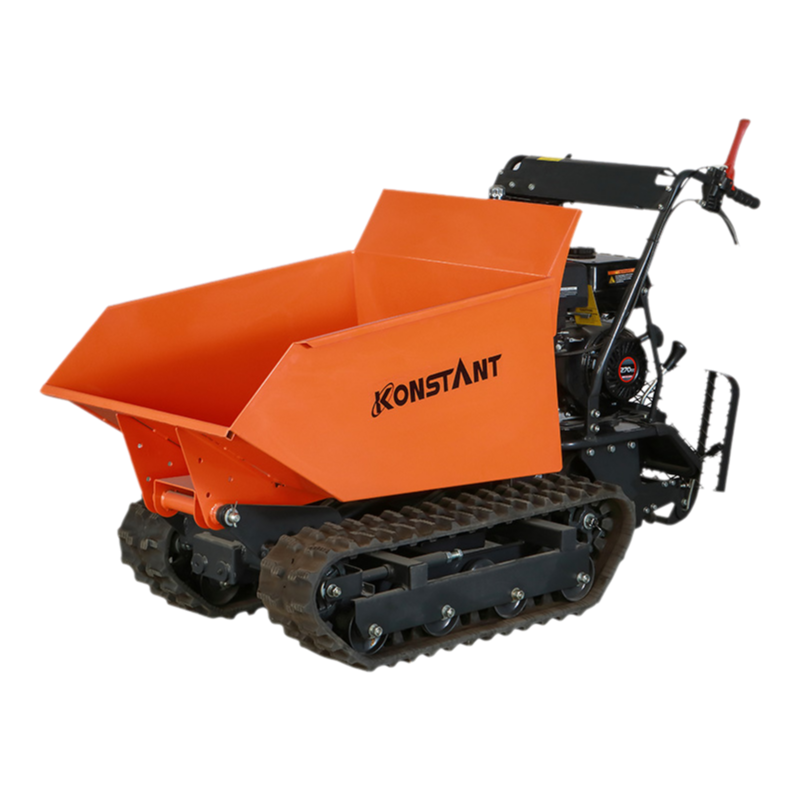
Ground conditions change the recommendation quickly. Tracked undercarriages distribute weight and are far less likely to bog on soft surfaces — mud, turf, or sand — and they also help on slopes. However, tracked units are slower on hard surfaces and typically demand more attention to undercarriage maintenance. Wheeled units roll faster on pavement and compact ground, and they are generally simpler and cheaper to maintain. Some contractors keep a small mixed fleet precisely for this reason: wheeled units for urban or paved work and tracked units for wet seasons or soft-field tasks. If your work spans both environments, test both types or rent before committing.
Controls and ergonomics are small details that save hours over months. Operators prefer simple, intuitive controls with clear forward/reverse and speed modulation. Comfortable grips, reduced vibration through handle design, and an unobstructed view of the load increase both efficiency and safety. A machine that looks great on paper but is awkward to steer will sit unused, while a slightly pricier but well-designed model gets used every day. Training is short but essential: even the intuitive controls need explanation for safe tipping, stable loading, and careful handling on slopes.
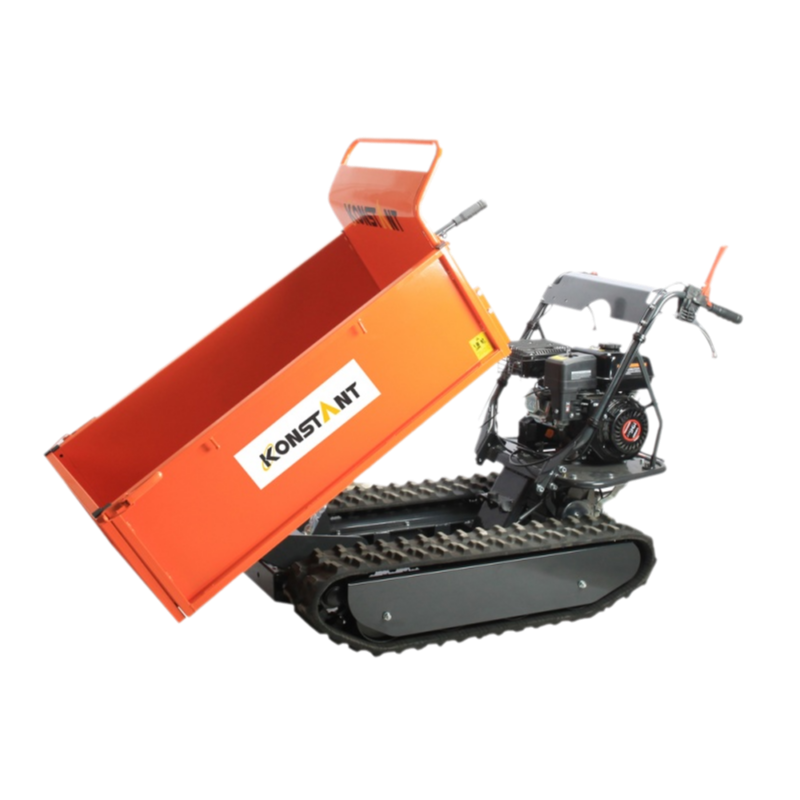
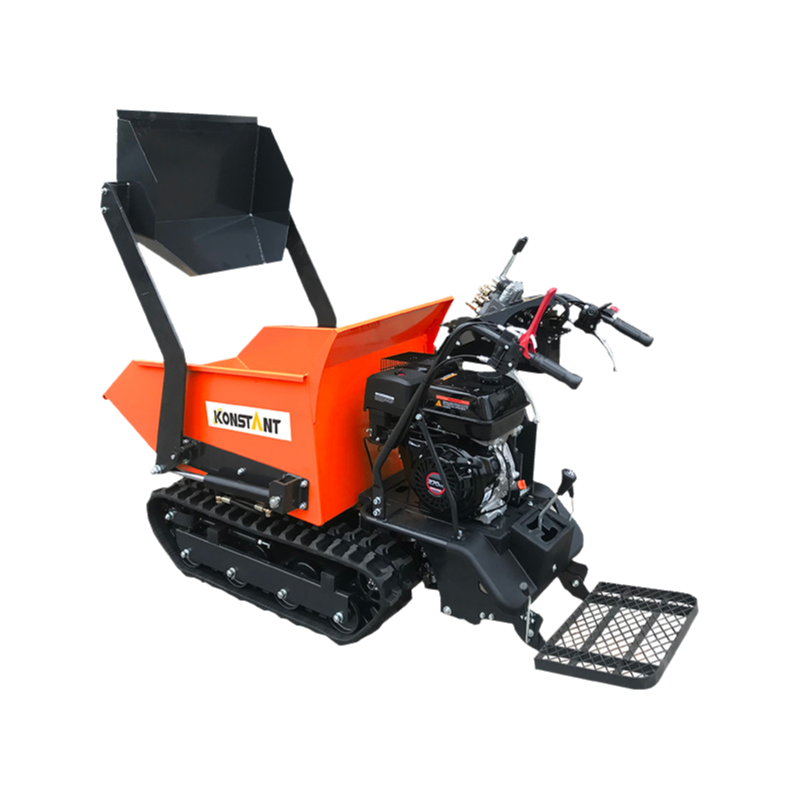
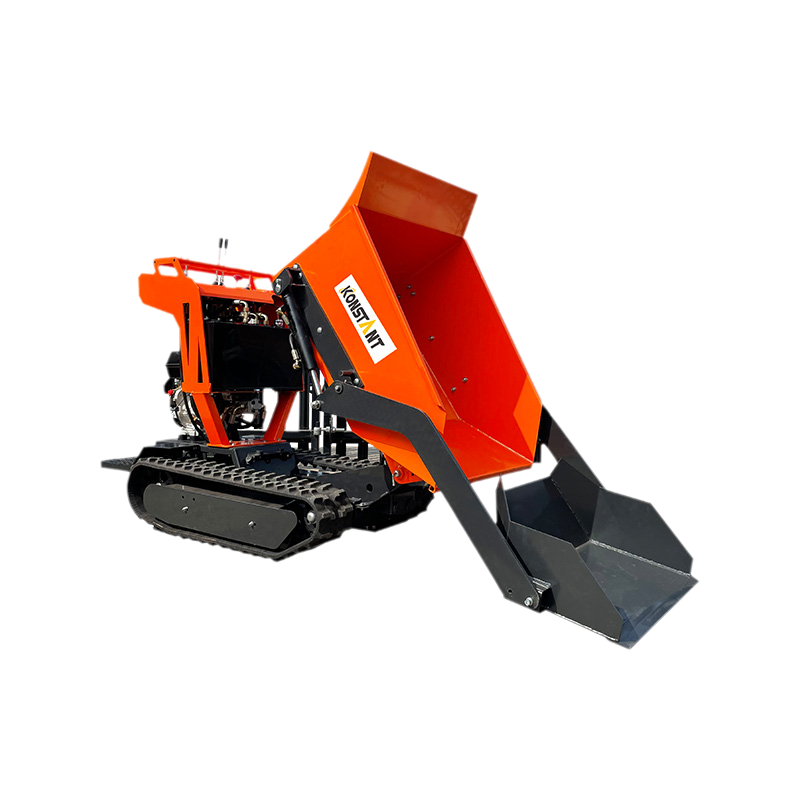
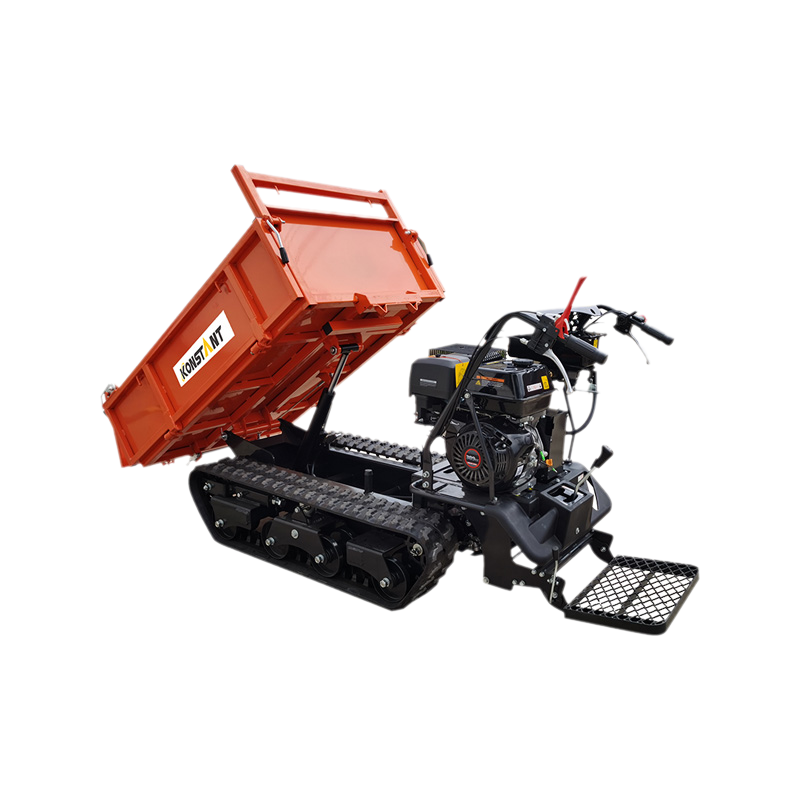
Unloading method affects cycle time and workflow. Hydraulic tipping is common and straightforward, but swivel tips or 360-degree discharge mechanisms can save considerable time in tight areas. Think about where you'll empty loads. If you regularly need to fill wheelbarrows or bins positioned to the side, a swivel tip may avoid multiple repositioning moves. If you dump into skips or a fixed discharge point, a simpler tip may be adequate. The time to reposition a compact carrier in a narrow space adds up over a shift; choose the unloading method that aligns with the way you plan to work.
Reliability comes down to maintenance and serviceability. Daily pre-shift checks should become ritual: visual inspection, confirmation of secure fastenings, checking for visible leaks, simple operational checks on controls and emergency stops. Weekly and monthly items — lubrication points, hydraulic lines, battery terminals, track or tyre condition, belt tension — should be recorded and acted upon. A clear service log avoids guesswork and makes warranty discussions straightforward. For electric models, battery care is critical: avoid deep discharge cycles where possible, charge in a dry, temperature-stable environment, and follow manufacturer guidance on storage and charging to preserve battery life. For petrol engines, regular oil changes, spark plug checks, and air filter maintenance prevent surprises.
Safety planning is straightforward but non-negotiable. The common incidents with compact carriers stem from unstable loads, tipping on slopes, or collisions in confined areas. Respect rated capacities and centre the load. Never attempt to tip on a steep incline; move to level ground before discharging. Set conservative speed limits in tight areas and around people. Establish simple exclusion zones around unloading points so bystanders are not in the tipping envelope. Train operators on emergency stop procedures and ensure that the emergency stop is tested daily. Regular toolbox talks that focus on practical scenarios — load stability, reversing on site, dealing with obstacles — reduce incidents more than elaborate checklists.
On the economic side, the rent-versus-buy decision depends on utilisation. If you need a unit for a single discrete job or occasionally through the year, rental is sensible; it lets you assess a model under real conditions. Renting also allows you to test new features — such as a swivel tip or battery type — before committing. If your calendar shows regular usage across seasons or for repeated project types, ownership often becomes economical quickly. When calculating total cost of ownership, include operator time shifts saved, fuel or electricity, consumables like tracks or tyres, planned maintenance, downtime risk, and residual value. Often the decision to own is driven more by consistent utilisation than by a simple price calculation.
Procurement tips: before buying, do a short field trial on a representative site if you can and have operators who will use the machine test it. Collect data in that trial: cycle times, charge or fuel consumption, operator feedback on ergonomics, and any site-specific issues like gate width or turning clearance that the spec sheet might have missed. Ask the vendor for a spare-parts list and local service contacts; a cheap machine with poor local support can be expensive in downtime costs. Request a simple starter kit: common spare items, a charging cable if electric, perhaps a spare battery, and clear documentation on maintenance intervals.
Operationally, integrate the carrier into the site workflow rather than treating it as an occasional helper. Identify standard loading and unloading points, plan routes to minimise reversing and tight turns, and think of the carrier as part of the material logistics chain. Small changes such as moving a stockpile a few metres closer to the work face can save a surprising number of minutes per trip and, multiplied across a long day, significantly reduce labour demands. Standardise these workflows across projects where possible so operators learn routines and optimisation becomes habitual.
There are common procurement mistakes to avoid. Do not under-spec capacity just to save on purchase price; an undersized unit will be constantly overloaded and wear quickly. Do not ignore ground conditions; wheeled models on soft ground will struggle. Do not assume all tracked units are equal — track design and undercarriage robustness vary widely and drive maintenance frequency. Do not overlook parts availability and local dealer support; a small price saving on purchase may cost days of downtime if the right seals or bearings are not readily available.
A few practical case examples illustrate the benefits. A landscaping crew working across small urban gardens used electric carriers for a week and reported a halving of wheelbarrow trips and an improved ability to start earlier in the morning because noise and emissions were lower; the crew used saved time to complete additional finishing work. A renovation contractor used a compact petrol unit to haul demolition rubble out a narrow side lane, avoiding expensive hoists and keeping other trades on schedule. A small farm used a tracked carrier during wet seasonal months to move bedding and feed across muddy yards where wheeled carts would have bogged down; the machine saved many hours of back-breaking work over a season.
Environmental and regulatory factors are growing considerations. Urban projects often face noise restrictions and local emission controls. Electric units avoid exhaust issues and reduce noisy operation, making them valuable for residential projects and indoor or near-neighbour work. Conversely, petrol units still have a role in remote, long-run tasks where recharging infrastructure is not practical. Think ahead to the likely regulatory environment of your typical projects when choosing power source.
In terms of lifecycle planning, consider accessories and spare parts at time of purchase. Ordering a spare battery, extra wear items for tracks, or common seals with an initial purchase avoids emergency downtime early in the machine's life. Also, standardising equipment across a fleet reduces complexity in training and spare stocking. If you plan to buy multiple units, negotiate for a starter spare-parts pack and consider service contracts that tie into predictable maintenance intervals.
Operator training is small in cost and large in benefit. Short, focused inductions that cover loading, route planning, safe tipping, and emergency shutdowns turn a marginally useful machine into a reliable site tool quickly. Create a short checklist for new operators that covers daily checks and safe handling rules; a written checklist reduces variation in practice across different operators and is a useful compliance record.
Maintenance culture matters. Crews that incorporate daily greasing, fastener checks, visual inspections and battery care into their routines see fewer surprises. Keep a simple log of hours and recurring faults — patterns will reveal systemic problems that warranty or supplier support should address. For electric models, a clean, controlled charging environment prolongs battery life; avoid temperatures during charging and do not store batteries fully discharged for long periods.
On safety, beyond the basics, think about ergonomics during long shifts. Handle vibration, control effort, and visibility all contribute to operator fatigue. Machines that reduce strain, offer intuitive control layouts, and have clear load sight-lines tend to be kept in regular use. A marginally higher initial investment in ergonomics often repays through better daily throughput and lower operator complaints.
If you are preparing to test or buy, create a short trial protocol: define typical load type, set a representative route, have a typical operator use the machine for a day or two, log cycle times and operator notes, check for any ground or access issues, and return a short report. Use that report when comparing models and quotes; it keeps the decision rooted in how the machine actually performs in your environment, not just on paper.
Finally, view the power barrow mini dumper as one element in a practical material-handling kit rather than a standalone solution. For many contractors, the right approach is mixed: wheeled carriers for urban paved jobs, tracked units for wet or soft ground, and a small fleet scaled to steady-state demand rather than occasional peaks. This approach balances flexibility with manageable maintenance and training. Used thoughtfully, these compact motorised carriers reduce repetitive labour, accelerate short-haul cycles, and make tight, messy, or awkward sites work in ways that keep projects running and crews less worn down at the end of a long day. If you start small, test on a representative route, and standardise what works, the machine becomes an asset that supports predictable, steady work rather than a novelty that sits unused between projects.
Related products

Latest Updates
-
What Makes a Small Tracked Dump Truck Practical for Construction Work
Short-distance movement of soil, sand, gravel and demolition debris is a constant requirement on man...
-
What Causes Reduced Performance in an Electric Mini Dumper
Electric mini dumpers sometimes lose speed, range or climbing ability after a stretch of ordinary us...

-
Welcome To Visit Us
No.30, Third Furong Road, Wuxi City, Jiangsu. 214100, China.
-
Call Us
Phone: +86 181-1889-1139
Phone: +86 181-1889-2139
-
Contact Us Online
E-mail: sales@konstantpm.com
E-mail: marketing@konstantpm.com
Copyright WUXI KONSTANT POWER TECH CO., LTD All Rights Reserved
 China Mini Dumpers Manufacturers Power Wheelbarrow Factory